
Sofa Cost-Per-Year Calculator
Enter details for two different sofas to see which one offers better long-term value. The tool calculates the total cost over a 10-year period and the average annual cost.
Budget Option
Better ValuePremium Option
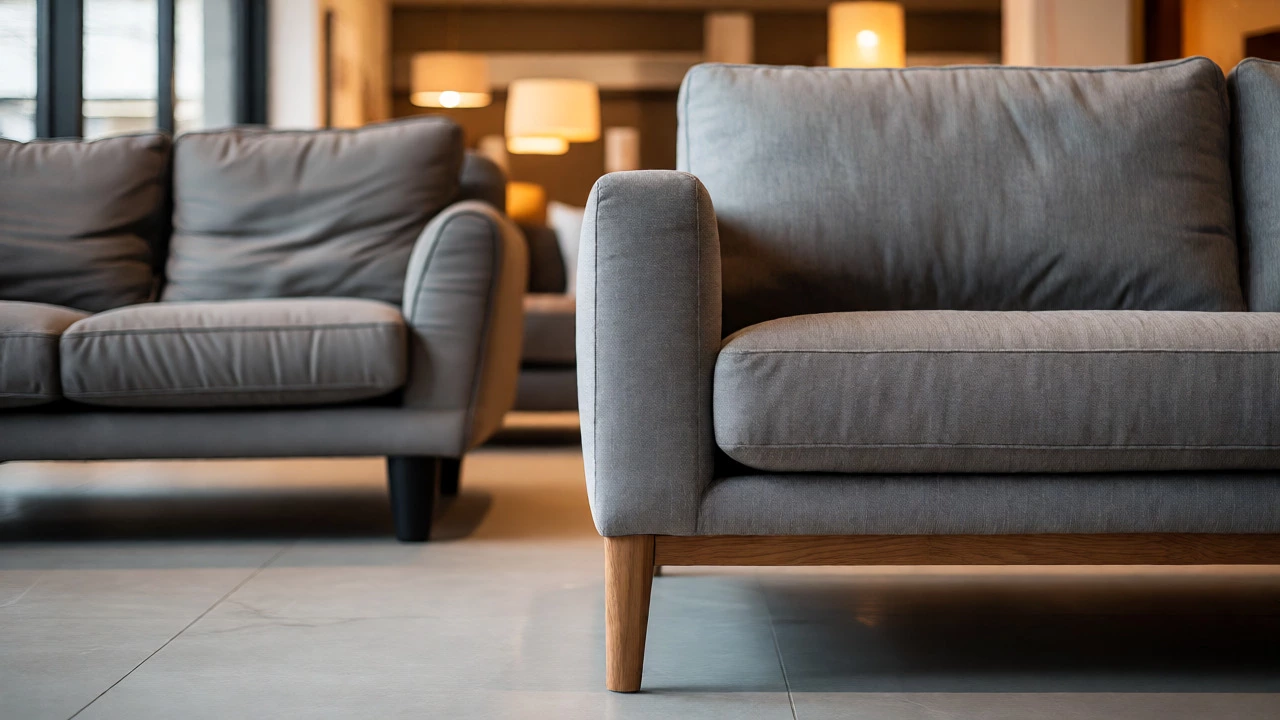
You’re standing in a showroom, staring at two identical-looking grey fabric sofas. One costs £400. The other costs £2,500. They look the same from ten feet away. But your gut tells you there’s a difference. Is it just marketing fluff designed to make you feel poor, or is that expensive couch actually going to survive your kids, your dog, and your Tuesday night movie marathons?
Here’s the blunt truth: expensive couches generally last longer, but not always for the reasons you think. It’s rarely about the brand name on the tag. It’s about what’s hiding under the cushions. If you buy a cheap frame with premium fabric, it will fail fast. If you buy a solid hardwood frame with average fabric, it might outlive you. Let’s break down exactly where your money goes and whether that £2,000 price tag is worth it.
The Skeleton Matters More Than the Skin
When people judge a sofa, they look at the upholstery. That’s a mistake. The longevity of any piece of furniture is determined by its internal structure, specifically the frame. Think of it like buying a car. You can wrap a rusted chassis in shiny new paint, but it’s still going to fall apart when you hit a pothole.
Cheap sofas typically use particleboard, plywood, or plastic frames. Particleboard is essentially sawdust glued together. It’s cheap to produce, but it hates moisture and stress. Over time, the screws loosen, the joints wobble, and the whole thing starts to creak. I’ve seen £300 sofas turn into rocking chairs within eighteen months because the frame simply gave up.
High-end sofas use kiln-dried hardwood, usually oak, maple, or ash. "Kiln-dried" means the wood was heated to remove moisture so it doesn’t warp or crack later. These frames are joined with dowels, corner blocks, and screws-not just staples and glue. This construction method distributes weight evenly. When you sit down, the force spreads across the entire structure rather than concentrating on one weak joint. That’s why a good wooden frame can last 15 to 20 years, while a particleboard frame might give out in 3 to 5.
The Cushion Conundrum: Foam vs. Down
Once the frame survives, the next thing to fail is the cushioning. This is where comfort meets durability, and it’s a tricky balance. Cheap sofas often use low-density foam (under 1.8 lbs per cubic foot). It feels soft initially, but it compresses quickly. Within a year, you’ll be sitting directly on the springs because the foam has lost its bounce.
Premium sofas use high-resilience (HR) foam with densities above 2.5 lbs per cubic foot. This foam is denser and more elastic. It pushes back against your weight instead of collapsing. Some luxury brands go further, using feather-and-down wraps over HR foam cores. This gives that cloud-like sinking feeling without the bottoming-out effect.
| Material Type | Average Lifespan | Comfort Level | Maintenance Needs |
|---|---|---|---|
| Low-Density Foam | 2-4 Years | Soft initially, flat later | None |
| High-Resilience Foam | 7-10 Years | Firm, supportive | Flip regularly |
| Feather & Down | 5-8 Years | Luxurious, sink-in | Fluff daily |
| Polyurethane Blend | 3-6 Years | Medium firmness | Minimal |
Down cushions are beautiful but demanding. If you don’t fluff them daily, they become lumpy bricks. High-end manufacturers know this, which is why many offer "foam-core wrapped in down" designs. You get the support of foam with the surface luxury of feathers. If you hate maintenance, stick to high-density foam. If you want the best sleep-on-the-couch experience, pay for the down.
Upholstery: The First Line of Defense
Your frame and foam might last decades, but if the fabric shreds, the sofa looks dead. This is where price tags often lie. A £1,500 sofa with thin linen will wear out faster than a £600 sofa with heavy-duty performance velvet.
Look at the rub count. This is a standard test (Wyzenbeek or Martindale) that measures how many cycles of abrasion a fabric can withstand before showing signs of wear. For a family home, you need at least 15,000 double rubs. For commercial or heavy-use areas, aim for 30,000+. Cheap fabrics often clock in at 5,000-8,000 rubs. They look fine on day one, but after six months of jeans rubbing against them, they start to shine and thin out.
Expensive sofas often use natural fibers like wool, silk, or high-grade cotton. These breathe well and feel great, but they stain easily. Cheaper modern options use synthetic blends like polyester or olefin. Surprisingly, some high-end designers now prefer these synthetics for their durability and stain resistance. Don’t assume "natural" equals "better." A tightly woven synthetic blend can outlast a delicate silk weave any day of the week.
The Hidden Costs: Springs and Suspension
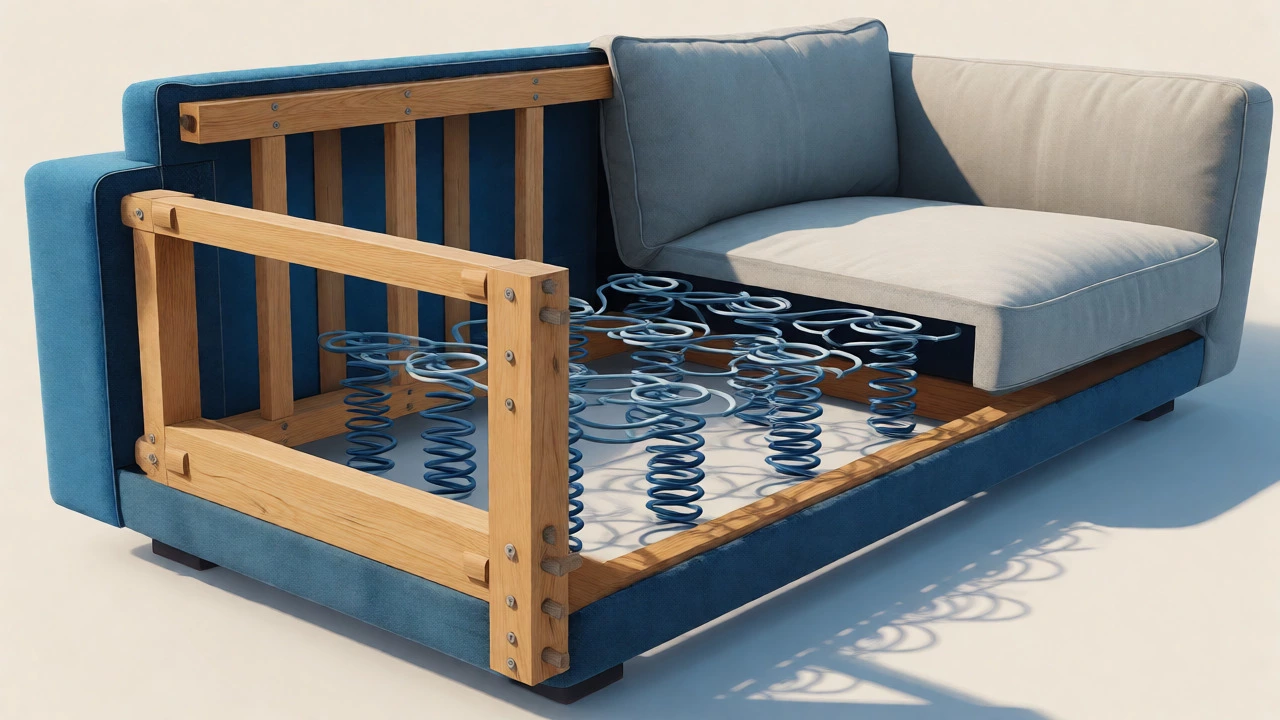
Beneath the cushions lies the suspension system. This is the third pillar of durability. There are three main types:
- Serpentine Springs: S-shaped wires held by clips. Common in mid-range sofas. They work okay, but if the clips break or the wire sags, the seat dips in the middle. Repairing them requires stripping the whole sofa down.
- Eight-Way Hand-Tied Springs: Individual coils tied together in eight directions. This is the gold standard found in luxury sofas. They provide independent support, meaning if your partner moves, you barely feel it. They distribute weight perfectly and resist sagging for decades.
- Elastic Webbing: Strips of rubberized fabric stretched across the frame. Often used in budget furniture. Over time, the rubber degrades and stretches out, leading to a "hammock" effect where you slide toward the center.
If you see "eight-way hand-tied" on the spec sheet, you’re looking at a sofa built to last. It’s labor-intensive, which drives up the price, but it’s worth every penny if you plan to keep the piece for more than five years.
Calculating Cost Per Use
So, does the expensive couch win? Let’s do the math. Imagine two scenarios in your Birmingham living room.
Scenario A: The Budget Buy. You spend £500 on a sofa. It lasts 4 years. Your annual cost is £125. After 12 years, you’ve bought three sofas and spent £1,500 total. Plus, you’ve dealt with the hassle of delivery, assembly, and disposal each time.
Scenario B: The Investment Buy. You spend £2,000 on a high-quality sofa. It lasts 15 years. Your annual cost is roughly £133. After 12 years, you’ve spent £2,000 once. You have one comfortable, sturdy piece of furniture instead of three landfill-bound units.
The costs are nearly identical annually. But Scenario B offers better comfort, less waste, and no shopping fatigue. The expensive couch wins on value, provided you actually take care of it.
When Cheap Actually Makes Sense
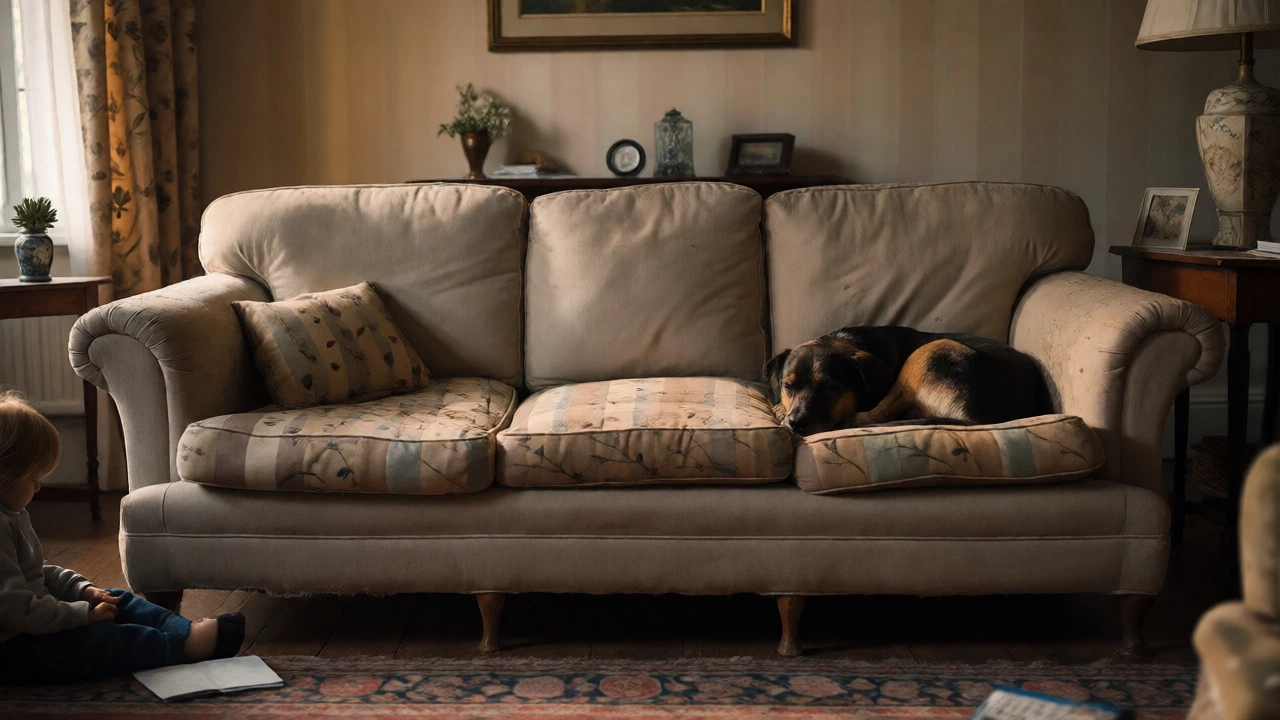
I’m not saying never buy a cheap sofa. Sometimes, it’s the smart move. If you’re furnishing a rental property, a student flat, or a guest room that gets used twice a year, spending £2,000 is silly. In those cases, a £400 sofa that looks good for three years is perfect.
Also, style trends change. If you love bold colors or unique shapes that might feel dated in five years, a cheaper option lets you refresh your space without breaking the bank. Just accept that you’ll likely replace it sooner.
How to Spot Quality Before You Buy
You don’t need an engineering degree to check quality. Do this quick inspection in the store:
- The Shake Test: Grab the arms and shake the sofa vigorously. Does it feel solid and heavy? Or does it rattle and feel light? Heavy usually means solid wood. Light often means particleboard.
- The Sit Test: Sit firmly in the center. Then stand up. Does the cushion spring back immediately? If it stays depressed for more than a few seconds, the foam density is too low.
- Check the Legs: Are they screwed in securely? Do they feel like real wood or hollow plastic? Weak legs are the first sign of a weak foundation.
- Ask About the Frame: Ask the salesperson, "Is the frame hardwood or engineered wood?" If they hesitate or say "wood," press for details. Trustworthy sellers know their specs.
Buying a sofa is a commitment. You’re inviting this object into your life for thousands of hours of sitting, sleeping, and eating crumbs. Spending more upfront usually buys you peace of mind, better posture, and a piece of furniture that becomes part of your home’s story rather than a temporary fix.
How long should a good quality sofa last?
A high-quality sofa with a hardwood frame and high-density foam should last between 10 and 15 years with regular use. Lower-quality models typically last 3 to 5 years before significant sagging or structural failure occurs.
Is leather more durable than fabric?
Generally, yes. Genuine leather is extremely durable and ages well, developing a patina rather than wearing out. However, it can scratch and crack if not conditioned. Fabric durability depends entirely on the weave and rub count; high-performance fabrics can rival leather in stain resistance and wear.
What is the most important factor in sofa durability?
The frame construction is the most critical factor. A kiln-dried hardwood frame joined with dowels and screws will significantly outlast a particleboard or plastic frame, regardless of the upholstery or cushion quality.
Are expensive sofas worth it for pets?
Yes, but choose the right material. Look for tight weaves like microfiber or performance velvets that resist claw snags. Avoid loose weaves like linen or boucle, which cats love to unravel. An expensive sofa with pet-friendly fabric is a better investment than a cheap one that needs replacing yearly due to damage.
Can I extend the life of my current sofa?
Absolutely. Rotate and flip cushions weekly to ensure even wear. Vacuum monthly to prevent dust from grinding into the fabric. Keep it out of direct sunlight to prevent fading. Consider professional cleaning annually to maintain fiber integrity.
Write a comment