
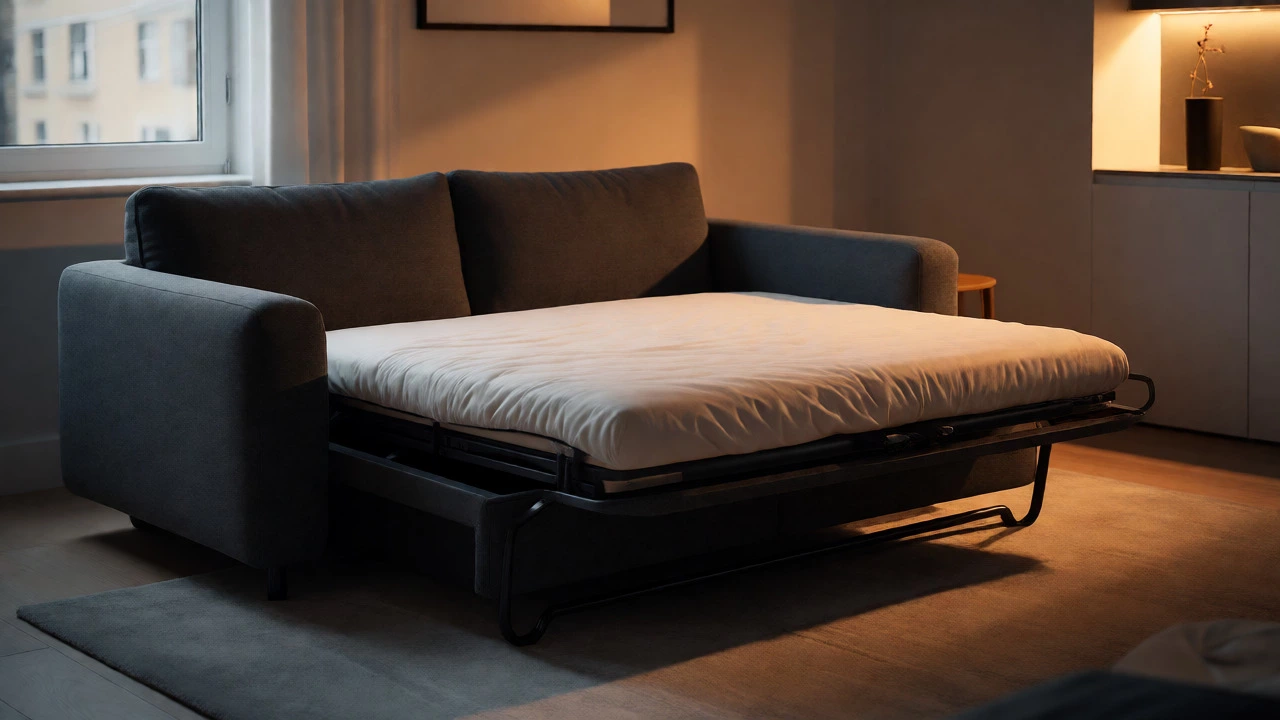
Sofa Bed Mattress Compatibility Finder
Step 1: Define Your Usage & Preferences
Your Recommendation
4-5 Inches
Best for occasional guests who prioritize softness.
Why this choice?
Important Considerations
Cons: Can retain heat, may crack if folded sharply repeatedly, can feel too hot for some sleepers.
Tip: Look for high-density foam (1.5-2.5 lbs/cu ft) for better durability.
Cons: Less contouring than foam, can be noisy if low quality, heavier weight.
Tip: Choose pocketed coils for quieter operation and better motion isolation.
Cons: Expensive (2-3x cost of standard foam), heavy, distinct scent initially.
Tip: Best for allergy sufferers and those wanting premium durability.
You bought the sofa bed. It looks sleek in your living room, folds up easily, and saves precious square footage. But then your first guest arrives, you pull out the mechanism, and they sink into a lumpy, uncomfortable surface that feels more like a punishment than a place to rest. The culprit? Usually, it’s not the frame-it’s the mattress inside.
The short answer is yes, you generally need a specific type of mattress for a sofa bed. Standard bedroom mattresses are too thick, too heavy, and too rigid to fit into most folding mechanisms. If you try to shove a 10-inch spring coil mattress into a slot designed for a 5-inch foam block, you’ll either break the hinge or end up with a backache by morning. But "special" doesn’t mean expensive or weird. It means understanding the physics of folding and the materials that survive repeated compression.
Why Your Regular Mattress Won’t Fit (And Shouldn’t)
Think about what happens when you close a book. If the pages are too thick, the cover bulges. Now imagine that book is a metal hinge mechanism weighing 80 pounds, and the pages are layers of steel coils and dense foam. Most modern sofa beds use one of three main conversion systems: the click-clack, the pull-out, or the futon style. Each has strict dimensional limits.
A standard queen-size bedroom mattress averages 10 to 14 inches in thickness. A typical sofa bed mattress slot allows for only 4 to 6 inches. Why so thin? Because when the sofa bed is closed, the mattress must fold completely flat against itself or tuck neatly under the seat cushion without creating a gap that ruins the seating posture. If you force a thicker mattress, you compromise the structural integrity of the frame. Over time, this leads to broken springs, warped wood slats, or a mechanism that simply won’t latch shut.
Beyond thickness, weight is a major factor. Innerspring mattresses are heavy. Pulling a 60-pound slab of steel and cotton out of a tight cabinet every night is a workout nobody wants. This is why memory foam and high-density polyurethane foam dominate the sofa bed market. They offer support without the bulk and weight penalty.
The Material Matrix: Foam, Springs, or Hybrids?
Not all thin mattresses are created equal. Some feel like sleeping on a yoga mat; others rival your king-sized bed at home. Here is how the common materials stack up against the demands of a folding mechanism.
| Material Type | Comfort Level | Durability in Folds | Best For |
|---|---|---|---|
| Memory Foam | High (contours to body) | Moderate (can crack if folded sharply) | Occasional guests who prioritize softness |
| Innerspring | Low to Medium (firm/bouncy) | High (handles bending well) | Frequent use where durability matters |
| Latex Foam | Medium-High (responsive) | High (resilient, resists sagging) | Allergy sufferers and hot sleepers |
| Hybrid | High (best of both worlds) | Moderate (complex construction) | Those wanting luxury in a compact space |
Memory foam is popular because it’s quiet and molds to your shape. However, pure memory foam can be tricky. If the foam is too soft, it bottoms out quickly. If it’s too dense, it might resist folding, putting stress on the hinges. Look for foams with a density rating between 1.5 and 2.5 pounds per cubic foot. This strikes a balance between support and flexibility.
Innerspring options have come a long way from the squeaky wire frames of the 1980s. Modern pocketed coil units are thinner and quieter. They don’t contour as much as foam, which some people prefer for spinal alignment. Crucially, springs handle the mechanical stress of opening and closing better than solid blocks of foam, which can develop permanent creases over time.
Latex is the premium choice. It’s naturally resistant to dust mites and mold-big pluses for a piece of furniture that stays tucked away in dark cabinets. Latex bounces back instantly, meaning it won’t leave an impression of your head after years of use. It’s also cooler than memory foam, which tends to trap heat. The downside? Price. A high-quality latex sofa bed mattress can cost two to three times more than a standard foam one.
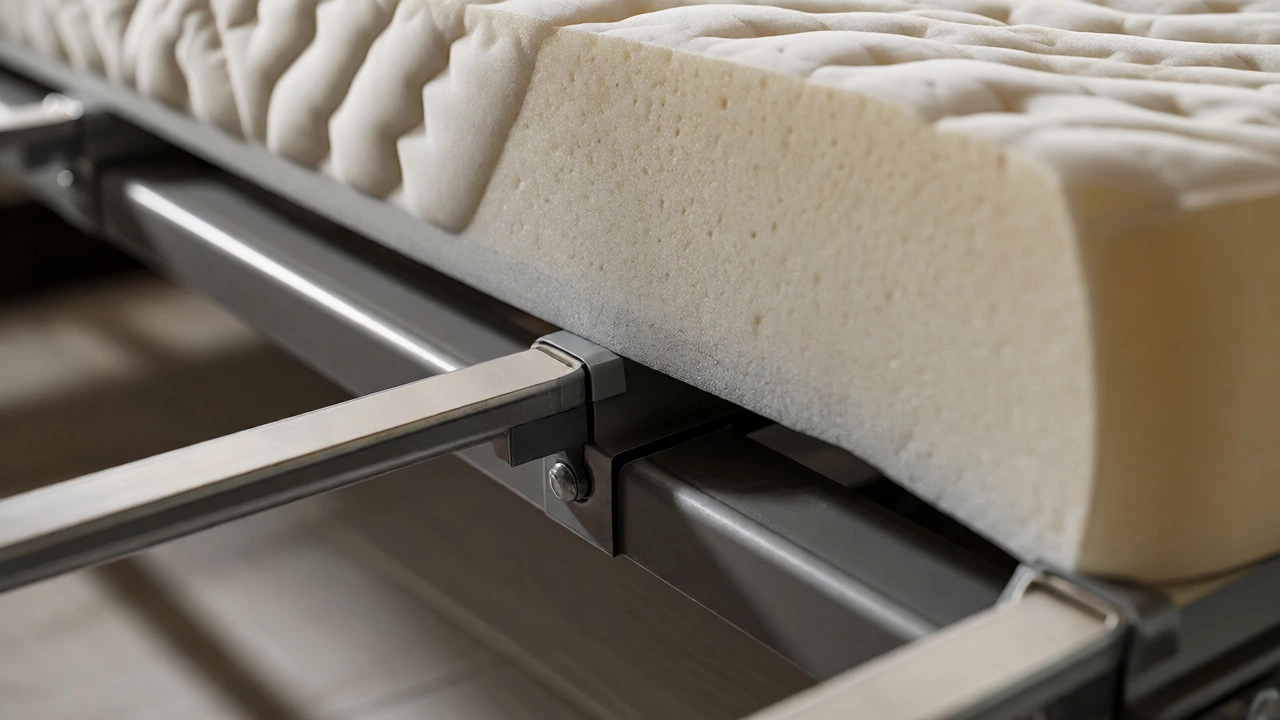
Thickness Matters: The Goldilocks Zone
You’ve probably seen mattresses labeled "4-inch," "5-inch," or even "3-inch." Which do you pick? It depends entirely on your existing frame and your personal tolerance for firmness.
- 3-Inch Foam: Often found in cheap futons or convertible chairs. Great for kids or emergency naps, but adults will likely wake up feeling every slat in the base. Use these only if your mechanism has zero clearance.
- 4-5 Inch Foam/Spring: The industry standard for most pull-out sofa beds. This thickness provides enough cushion to hide the metal bars underneath while still fitting into the housing. If you’re replacing an old mattress, measure the depth of the current one before buying.
- 6+ Inch Hybrids: These are rare and usually require a specific "deep-pocket" sofa bed design. If your sofa bed claims to be "luxury," it might accommodate this. Do not assume you can squeeze a 7-inch mattress into a 5-inch slot just because it’s compressible. You’ll void warranties and break hinges.
A pro tip: Measure the interior dimensions of your sofa bed’s storage compartment when it’s fully open. Don’t just guess based on the mattress size. Sometimes, the fabric lining adds an extra half-inch of resistance. If you’re buying online, check the return policy. You want to test the fit before committing.
Comfort Hacks for Non-Specialized Mattresses
What if you already own a decent sofa bed but hate the mattress? Or what if you can’t find a replacement that fits your vintage frame? You don’t necessarily need to buy a new unit. There are ways to upgrade the experience without replacing the core component.
Start with a mattress topper. A 2-inch memory foam topper can transform a rock-hard innerspring unit into something bearable. Ensure the topper is made of flexible foam that can bend with the fold. Avoid gel-infused toppers if they’re too stiff, as they may crack at the hinge point.
Another trick is layering. If your sofa bed uses separate cushions for the seat and back, consider adding a thin plywood board between the mattress and the metal slats. This prevents the "hammock effect," where the center sags under weight. Many high-end sofa beds include a wooden deck for this reason. If yours doesn’t, a custom-cut piece of birch plywood (1/4 inch thick) can work wonders for stability.
Finally, consider the sheets. Standard fitted sheets often slip off during the night because the corners aren’t deep enough. Invest in sheets specifically designed for sofa beds, which have elasticated edges tailored for lower profiles. Or, go simple: use a large flat sheet and safety pins to keep it secure.

Maintenance: Making It Last
A special mattress is useless if you treat it like a regular bed. Sofa bed mattresses endure unique stresses. They sit compressed for months, then unfold suddenly. They absorb sweat in a confined space with poor airflow.
Vacuum the mattress regularly using an upholstery attachment. Dust and skin cells accumulate in the seams, attracting allergens. Every few months, unzip the cover (if removable) and wash it according to the manufacturer’s instructions. This keeps the foam fresh and prevents odors from building up in the enclosed cabinet.
Rotate the mattress every six months. Yes, even though it’s small. Rotating ensures even wear on the foam or springs, preventing permanent body impressions. If you have a hybrid mattress, flip it if the design allows. Not all do, so check the label.
When storing the sofa bed for long periods (like during summer), prop it open slightly if possible to let air circulate. Trapped moisture is the enemy of foam and latex, leading to mold growth. If you live in a humid climate, consider placing a silica gel packet inside the storage area to absorb excess dampness.
Buying Guide: What to Look For
If you’re ready to replace your mattress, here’s a quick checklist to ensure you get the right product.
- Measure Twice: Length, width, and thickness. Note any obstructions like armrests or internal supports.
- Check the Weight Limit: Ensure the new mattress plus the sleeper doesn’t exceed the frame’s capacity. Heavy latex mattresses might strain older mechanisms.
- Evaluate Firmness: Side sleepers need softer foam (medium-soft). Back and stomach sleepers benefit from firmer support (medium-firm).
- Look for Certifications: CertiPUR-US® certification ensures the foam is free from harmful chemicals and has low VOC emissions. This is crucial for indoor air quality.
- Read Reviews on Durability: Ignore initial comfort reviews. Look for comments mentioning "sagging after a year" or "creaking hinges." These indicate long-term performance issues.
Remember, the goal isn’t to replicate your master bedroom setup exactly. It’s to provide a restful, safe, and durable sleeping solution that integrates seamlessly with your living space. With the right material and proper maintenance, your sofa bed can become a beloved feature of your home rather than a compromise.
Can I use a regular twin mattress on a sofa bed?
Generally, no. Regular twin mattresses are typically 8-12 inches thick, whereas sofa bed slots usually accommodate only 4-6 inches. Using a standard mattress will prevent the sofa from closing properly and may damage the folding mechanism due to excessive pressure.
How long does a sofa bed mattress last?
With moderate use (once or twice a week), a quality sofa bed mattress lasts 5-7 years. Frequent daily use can reduce this lifespan to 3-4 years, especially if the mattress is subjected to rapid folding and unfolding without proper care.
Is memory foam bad for sofa beds?
No, but it requires caution. Pure memory foam can retain heat and may crack if folded sharply repeatedly. High-density memory foam (1.8 lbs/cu ft or higher) works best. For better durability and breathability, consider hybrid models that combine foam with pocketed coils or latex.
How do I clean a non-removable sofa bed mattress cover?
Use a vacuum with an upholstery brush weekly to remove dust. For stains, spot-clean with a mild detergent and cold water, blotting gently-do not soak. Allow it to dry completely before closing the sofa bed to prevent mold. Baking soda can be sprinkled on the surface to neutralize odors before vacuuming.
Are sofa bed mattresses comfortable for everyday sleeping?
Most are not ideal for nightly use due to their thin profile and underlying metal bar structures. However, high-end hybrid or latex models can approach the comfort of a standard bed. For everyday sleeping, look for mattresses at least 5-6 inches thick with reinforced edge support.
Write a comment