
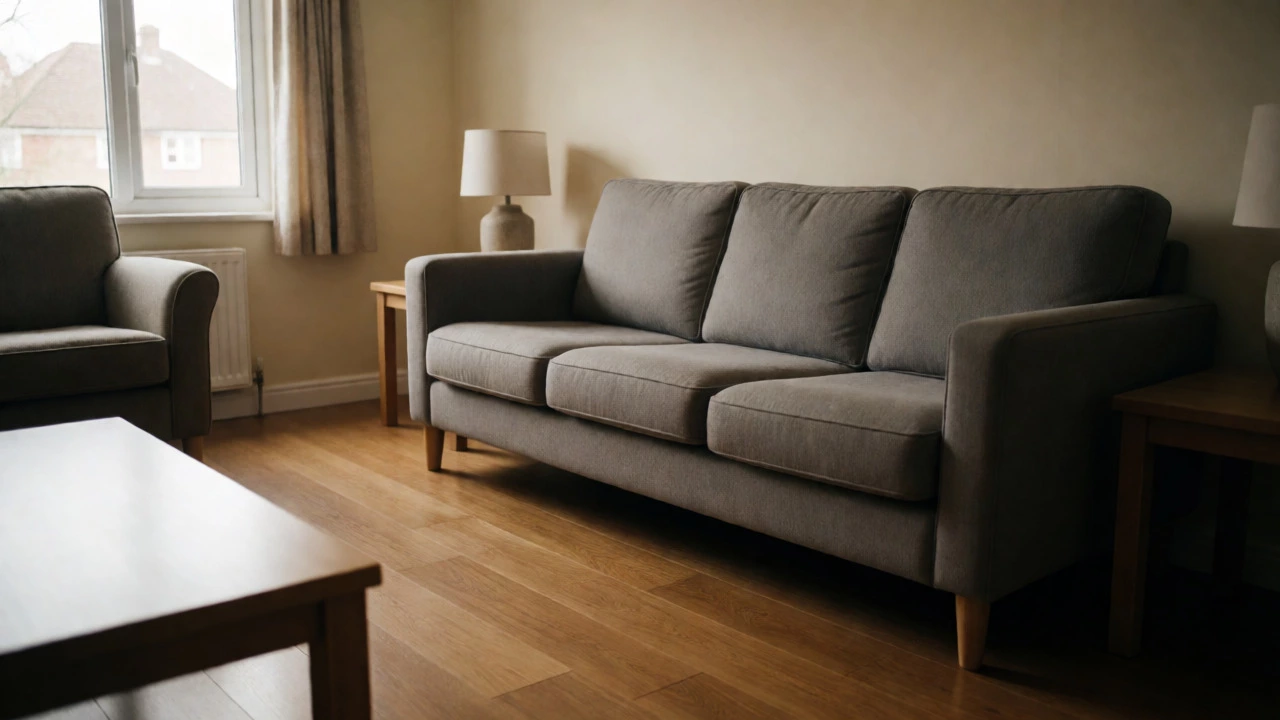
Sofa Placement Simulator
Adjust the slider to see how moving your sofa off the wall affects room perception, traffic flow, and styling opportunities.
Analysis & Recommendations
Space Perception
Maximized Floor Area
Good for very small rooms under 10ft wide.Social Dynamic
Can feel disconnected in large open plans.Traffic Flow
Clear Paths
Minimal obstruction to movement.Styling Opportunity
Limited
Relies mainly on wall art above.You walk into a friend’s house, and something feels off. The room is beautiful, the paint is fresh, but the conversation flows awkwardly. People are shouting across the space or sitting stiffly on the edge of their seats. More often than not, the culprit isn’t the decor-it’s the sofa placement. We’ve all been trained to believe that pushing the couch flush against the wall is the only way to save space. It’s the default setting for most living rooms, especially in smaller UK homes where every square foot counts. But does it actually work?
The short answer is no, not always. In fact, sticking your back to the wall can make a large room feel cavernous and a small room feel cramped. It’s time to rethink how you arrange your seating. Whether you have a sprawling three-seater or a compact two-seater, the position of your couch dictates the energy of the entire home. Let’s break down when you should keep it against the wall, when you should float it, and how to do it without creating a tripping hazard.
The Myth of Maximum Space
Why do we push sofas against walls? Mostly because we’re afraid of wasting floor area. If the couch doesn’t touch the wall, our brains tell us there’s a "gap" that needs filling. But in interior design, negative space is just as important as positive space. When you pull a sofa even six inches away from the wall, you create an air gap that allows light to bounce around the room. This simple trick makes the furniture look lighter and the room feel more breathable.
Think about a movie theatre. You don’t sit with your head pressed against the screen; you have distance. Your living room should function similarly. A sofa pushed tight against the wall absorbs sound and creates a visual barrier between the seating area and the rest of the room. By pulling it forward, you invite movement. It signals to guests that this is a zone for interaction, not just storage for people.
When Floating Your Sofa Works Best
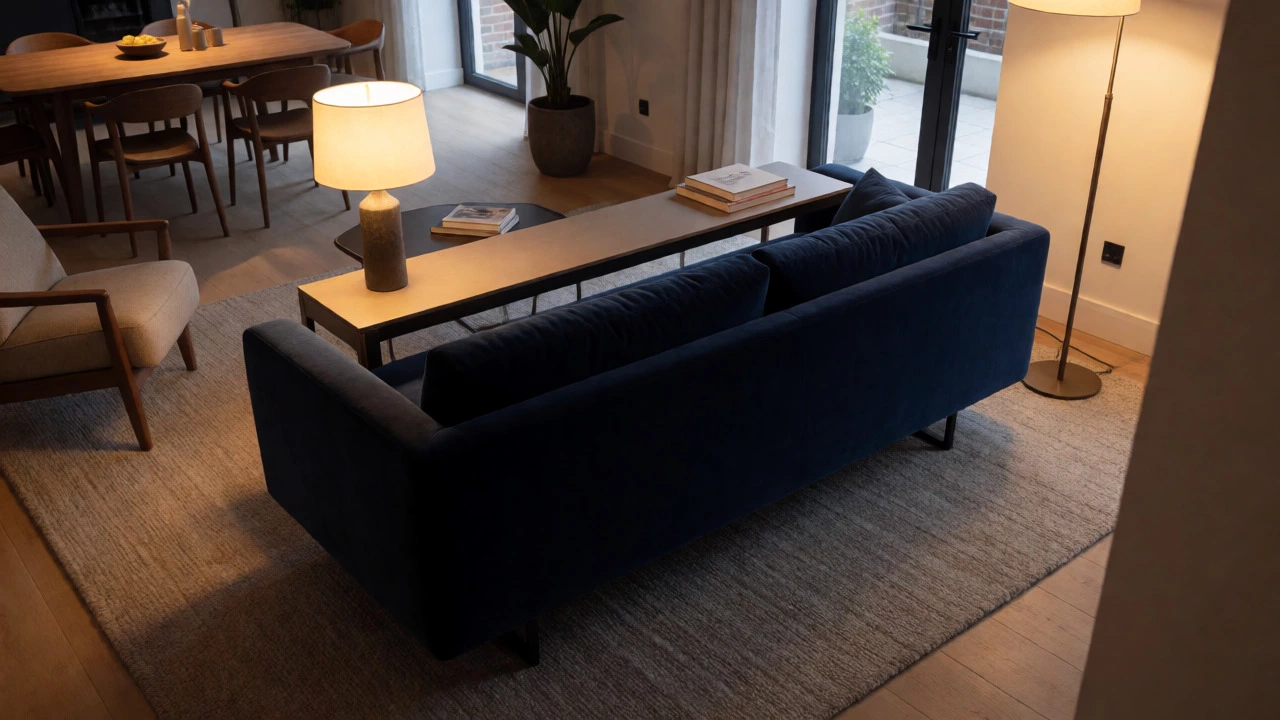
Floating furniture-placing it in the middle of the room rather than against a perimeter-is a technique used by high-end designers for a reason. It works best in open-plan spaces or larger rectangular rooms. If your living room connects directly to a dining area or kitchen, a floating sofa acts as a natural divider. It defines the lounge zone without needing a bulky bookshelf or a half-wall.
Consider a typical Birmingham terrace conversion or a modern apartment with an open-plan layout. Pushing the sofa against the far wall might leave a dead zone in the center. Instead, place the sofa facing the window or the fireplace, with its back to the entryway. This creates a cozy enclave. To make this work, you need to anchor the arrangement. A large rug under the front legs of the sofa helps ground the piece, preventing it from looking like it’s drifting aimlessly.
There’s also a social benefit. When a sofa floats, people tend to sit closer together. The intimacy increases. You’re not shouting over a vast expanse of carpet; you’re within earshot. For households that value conversation, this subtle shift in geometry can change the dynamic of family dinners or guest visits entirely.
When the Wall Is Your Friend
Don’t get me wrong: floating isn’t always right. Sometimes, the wall is exactly where your couch belongs. This is especially true in narrow rooms or L-shaped layouts where traffic flow is critical. If pulling the sofa out blocks the path to the kitchen or the bathroom, put it back. Functionality must always trump aesthetics.
Another scenario where wall-placement wins is when you have limited depth. If your room is less than 10 feet wide, pulling a standard-depth sofa (usually around 34-36 inches deep) away from the wall leaves little room for walking behind it. In these cases, use the wall for support. It provides stability and prevents the sofa from sliding on hard floors. Plus, it keeps the central floor area clear for coffee tables or play areas for kids.
Also, consider your power outlets and charging stations. If your media unit is built-in along one wall, keeping the sofa opposite it ensures easy access to remotes and cables. Trying to hide extension cords behind a floating sofa can lead to a tangled mess that ruins the clean look you were aiming for.
How to Float a Sofa Without Chaos
If you decide to move your couch off the wall, you need a plan. Random placement looks messy. Here is a step-by-step approach to getting it right:
- Start with the focal point: Identify what the sofa should face. Is it the TV? A fireplace? A view? The sofa should be oriented toward this anchor, regardless of where the walls are.
- Measure the walkways: Ensure there is at least 30 to 36 inches of clearance between the back of the sofa and any other furniture or wall behind it. This allows people to pass comfortably.
- Add a console table: This is the secret weapon of floating sofas. Placing a slim console table behind the sofa fills the visual void. It gives you a surface for lamps, books, or plants, making the arrangement feel intentional rather than accidental.
- Use lighting to define zones: Floor lamps placed beside the floating sofa help enclose the space. Overhead lighting alone can make a floating island feel exposed.
A common mistake is placing the sofa too far from the conversation partners. If you have armchairs, they should be close enough to hold a normal conversation without raising your voice. Aim for a circle of seating no wider than 8 feet. If your sofa is floating, ensure the chairs complement its position, not fight against it.
Visual Comparison: Wall vs. Floating
To help you decide which strategy fits your specific room, here’s a quick breakdown of the pros and cons of each approach.
| Feature | Against the Wall | Floating (In Room) |
|---|---|---|
| Space Perception | Maximizes floor area; good for very small rooms. | Creates distinct zones; good for open plans. |
| Social Dynamic | Can feel formal or distant if room is large. | Promotes intimacy and easier conversation. |
| Traffic Flow | Clear paths; minimal obstruction. | Risk of blocking paths if not measured carefully. |
| Styling Opportunity | Limited; relies on wall art above. | High; allows for consoles, rugs, and layered lighting. |
| Cable Management | Easy; hides wires behind the unit. | Challenging; requires careful routing or battery solutions. |
Dealing with Specific Room Shapes
Not all living rooms are created equal. Your architectural constraints will dictate the final decision. In long, narrow rooms, placing the sofa against the longest wall is usually the safest bet. It emphasizes the length and keeps the room feeling linear. Pulling it out in a narrow room can make it feel like a bowling alley.
In square rooms, however, symmetry is key. Centering the sofa on the main axis, perhaps backed by a console, creates balance. If you have a bay window, try angling the sofa slightly toward the view. This breaks up the rigidity of the walls and draws the eye outward. For irregular shapes, such as those found in older Victorian conversions, don’t force a straight line. Use curved sofas or modular sections to follow the contours of the room.
Remember, the goal is comfort. If a floating arrangement makes you feel anxious because you lack a "back," stick to the wall. There is no shame in traditional layouts if they make you feel secure. Design rules are guidelines, not laws.
Practical Tips for Small UK Homes
Living in a city like Birmingham means dealing with varied housing stock, from Victorian terraces to modern flats. In smaller properties, every inch matters. If you want to try floating your sofa but worry about space, try the "half-pull." Move the sofa just 4 to 6 inches off the wall. This is enough to create an air gap and improve airflow without consuming significant floor space. It’s a low-risk experiment that yields high rewards.
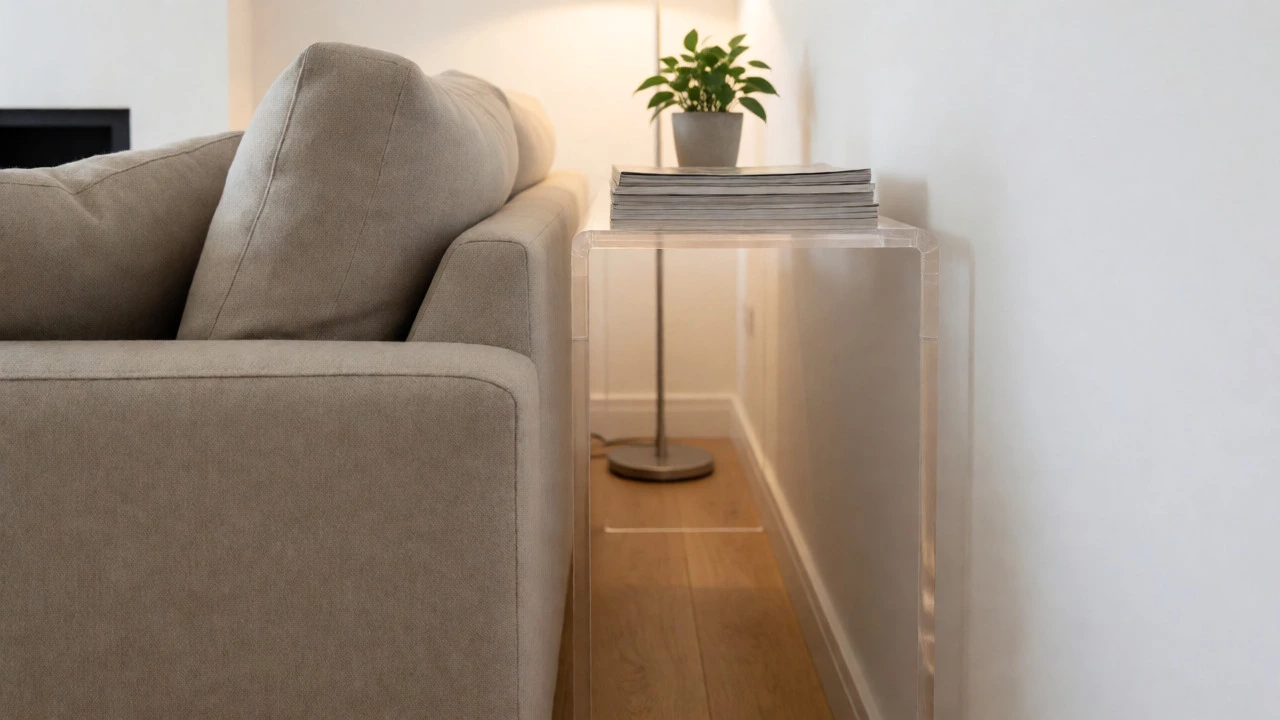
Another tip for small spaces: use transparent or leggy furniture behind the sofa. A glass console or a slim metal shelf takes up less visual weight than a solid wood sideboard. This keeps the room feeling airy while still providing the functional benefits of a floating setup.
Finally, test your layout before committing. Use cardboard boxes cut to the size of your sofa and place them in different positions. Walk through the room. Sit down. Do you bump into things? Does the view feel blocked? Physical testing beats mental visualization every time.
Does pulling a sofa off the wall really make a room look bigger?
Yes, counterintuitively, it often does. By creating a shadow gap between the sofa and the wall, you allow light to circulate, which visually expands the boundaries of the room. It also prevents the "boxed-in" feeling that occurs when heavy furniture touches the perimeter.
What should I put behind a floating sofa?
A console table is the most popular choice. It adds height, provides storage, and anchors the sofa. Alternatively, you can use a row of potted plants, a low bookcase, or simply leave the space empty if you have a beautiful rug underneath. Avoid cluttering the space behind the sofa, as it can look messy from the back.
Is it bad Feng Shui to have a sofa against a wall?
Not necessarily. Feng Shui values "support," so having a solid wall behind you is considered protective. However, if the room is large, being too far from the action can isolate you. The ideal compromise is to have a solid backing (wall or sturdy cabinet) but remain part of the active conversation circle.
How much space do I need behind a floating sofa?
For comfortable passage, you need at least 30 to 36 inches (75-90 cm) between the back of the sofa and the next obstacle. If you’re using a console table, add another 12-15 inches for the table itself plus walking room. Anything less than 24 inches will feel cramped and hinder movement.
Can I float a sectional sofa?
Yes, but it requires careful planning. Sectionals are bulky, so floating them can dominate a room. Often, it works best to tuck one end against a wall or corner while letting the longer section float. This combines the security of wall support with the openness of a floating layout.
Write a comment