
Coffee Table Shape & Size Advisor
Input your room details to determine which shape fits best for your space, safety, and style.
Walk into a modern living room and you’ll likely notice the coffee table sitting right in the center of the action. It’s not just a place to put your remote or a stack of magazines; it defines the flow of the space. But when you’re standing in a showroom or scrolling through online catalogs, one question often pops up: should I get a square or circle coffee table? It seems like a small detail, but the shape can completely change how your room feels and functions.
The choice isn’t just about aesthetics. It’s about traffic flow, safety, and how many people actually use the table daily. A Square Coffee Table is a rigid, geometric piece that offers maximum surface area and clean lines. On the other hand, a Round Coffee Table is a fluid, organic form that eases movement and reduces visual clutter. Let’s break down which one actually works for your home, based on real-world scenarios rather than just trends.
Key Takeaways
- Square tables maximize usable surface area and fit neatly into rectangular rooms with straight-lined sofas.
- Round tables improve foot traffic flow and are safer for households with young children or frequent guests.
- Size matters more than shape: ensure at least 45cm (18 inches) of clearance between the sofa and the table.
- Mixed shapes (e.g., two nesting tables) can solve the dilemma by offering both functionality and style.
The Geometry of Space: How Shape Affects Flow
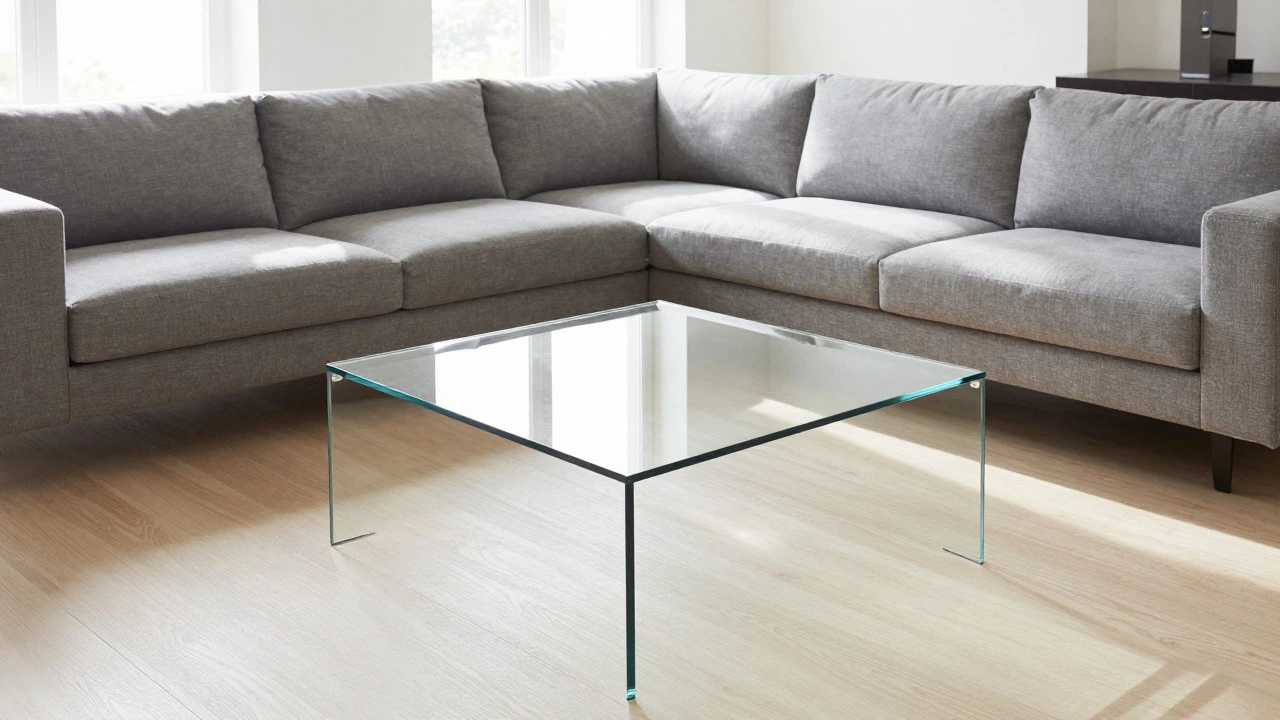
Think about how you move through your living room. Do you walk in straight lines from the door to the TV, or do you weave around obstacles? This is where the geometry of your coffee table comes into play. A square table has four distinct corners. These corners create hard edges that can catch ankles if someone walks too fast or trips over a rug. If your living room is narrow or L-shaped, a square table might feel bulky because it forces you to walk around its perimeter.
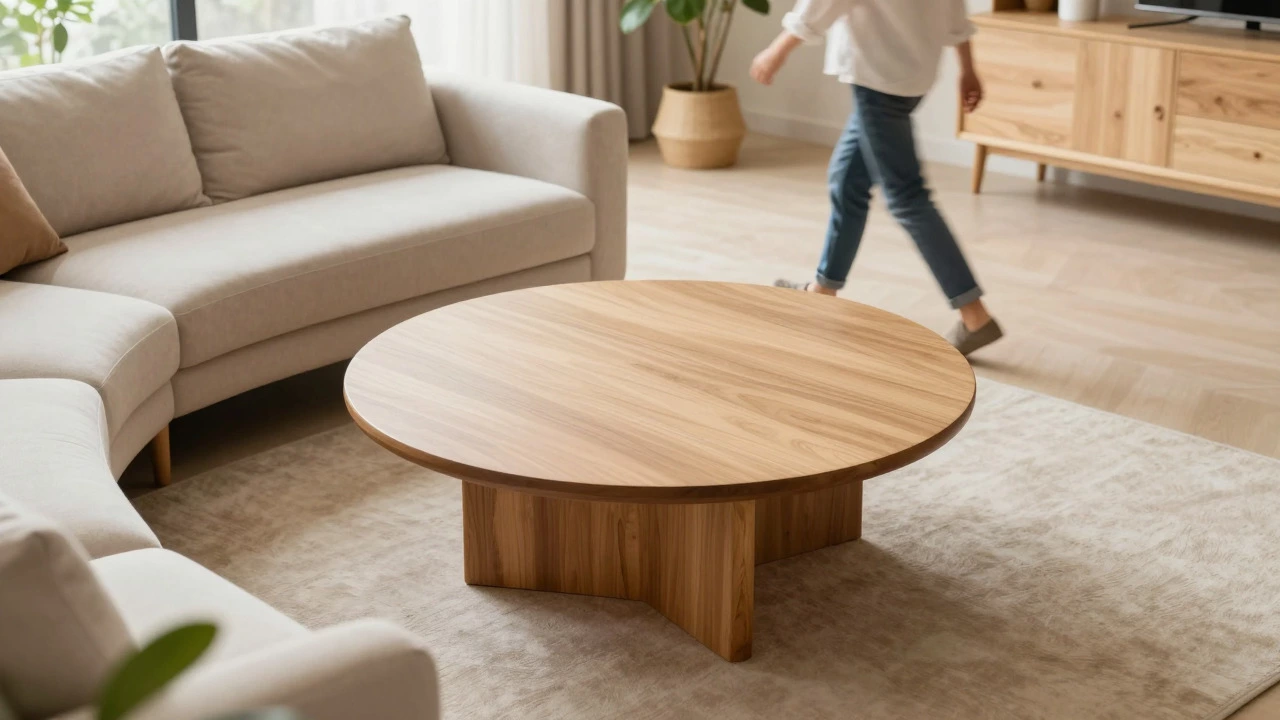
A round table eliminates these sharp corners. The circular shape allows people to glide around the table without bumping into protruding edges. This makes round tables ideal for open-plan spaces where the kitchen flows directly into the living area. In these high-traffic zones, a round table acts as a gentle island rather than a barrier. However, this fluidity comes at a cost: you lose some corner space. You can’t lean a book against the edge of a round table as easily as you can with a square one.
Surface Area and Practicality
If you have a large family or entertain often, surface area is king. A square table provides consistent width across its entire length. For example, a 90cm x 90cm square table offers nearly 0.81 square meters of usable space. A round table with a 90cm diameter offers only about 0.63 square meters. That’s a significant difference. Those extra corners on a square table are perfect for placing multiple drinks, a snack plate, and a laptop simultaneously.
But here’s the catch: while square tables offer more total area, they can feel crowded if placed too close to the sofa. Round tables, despite having less area, often *feel* larger because they don’t visually interrupt the line of sight. They draw the eye inward, creating a focal point. If your primary use case is holding a tray of food during movie nights, go square. If it’s mostly decorative with occasional cups of tea, a round table might suffice and keep the room feeling airy.
Matching Your Sofa Configuration
Your sofa dictates the best table shape. Most standard sofas are rectangular. Placing a square table in front of a rectangular sofa creates a harmonious, grid-like alignment. The parallel lines look intentional and organized. This setup is particularly effective in formal living rooms or spaces with traditional decor where symmetry is valued.
However, if you have a curved sofa, a sectional, or a modular arrangement, a round table often complements the curves better. It breaks up the rigidity of the seating arrangement. Imagine a U-shaped sectional; a square table in the middle might feel cramped and disconnected from the outer arms. A round table fits naturally into the negative space, connecting all sides of the seating group equally. Always measure the distance from the seat edge to the back of the sofa. Aim for a table that is no wider than two-thirds of the sofa’s length to maintain balance.
Safety and Household Dynamics
Let’s talk about reality. Do you have toddlers running around? Is there an elderly relative who uses a walker? Safety is a practical concern that often outweighs aesthetic preferences. Square and rectangular tables have sharp corners that can cause serious injuries if bumped into. Round tables, by definition, have no corners. This makes them the safer choice for active households. Even if you choose a square table, look for models with softened or beveled edges to mitigate this risk.
Consider also the material. A glass square table looks sleek but magnifies the danger of sharp edges. A wooden round table with a matte finish feels warm and forgiving. If your home is a hub of activity, prioritize the shape that minimizes collision risks. You can always add a protective corner guard later, but changing the shape of the table means buying a new piece of furniture.
Styling Tips for Each Shape
Once you’ve chosen a shape, styling it correctly is crucial. For a square table, use accessories that respect the geometry. Place a rectangular vase or a set of books stacked vertically in the center. Avoid round objects in the dead center, as they can clash with the angular lines. Instead, anchor the table with a flat, square runner or a low-profile sculpture.
For a round table, embrace the curve. Use round vases, spherical ornaments, or a circular tray. The key is to avoid making the table look like a target. Keep the height of decorations low so they don’t block conversation. A common mistake is placing a tall, narrow plant in the center of a round table; this blocks sightlines between people sitting opposite each other. Keep it low and wide to maintain connection.
| Feature | Square Table | Round Table |
|---|---|---|
| Surface Area | Higher (maximizes corners) | Lower (curved edges) |
| Traffic Flow | Can obstruct paths | Eases movement around edges |
| Safety | Sharp corners (risk of injury) | No corners (safer for kids) |
| Best For | Formal rooms, large families | Open plans, small spaces, kids |
| Visual Impact | Structured, bold | Soft, inviting |
When Neither Shape Works: The Nesting Alternative
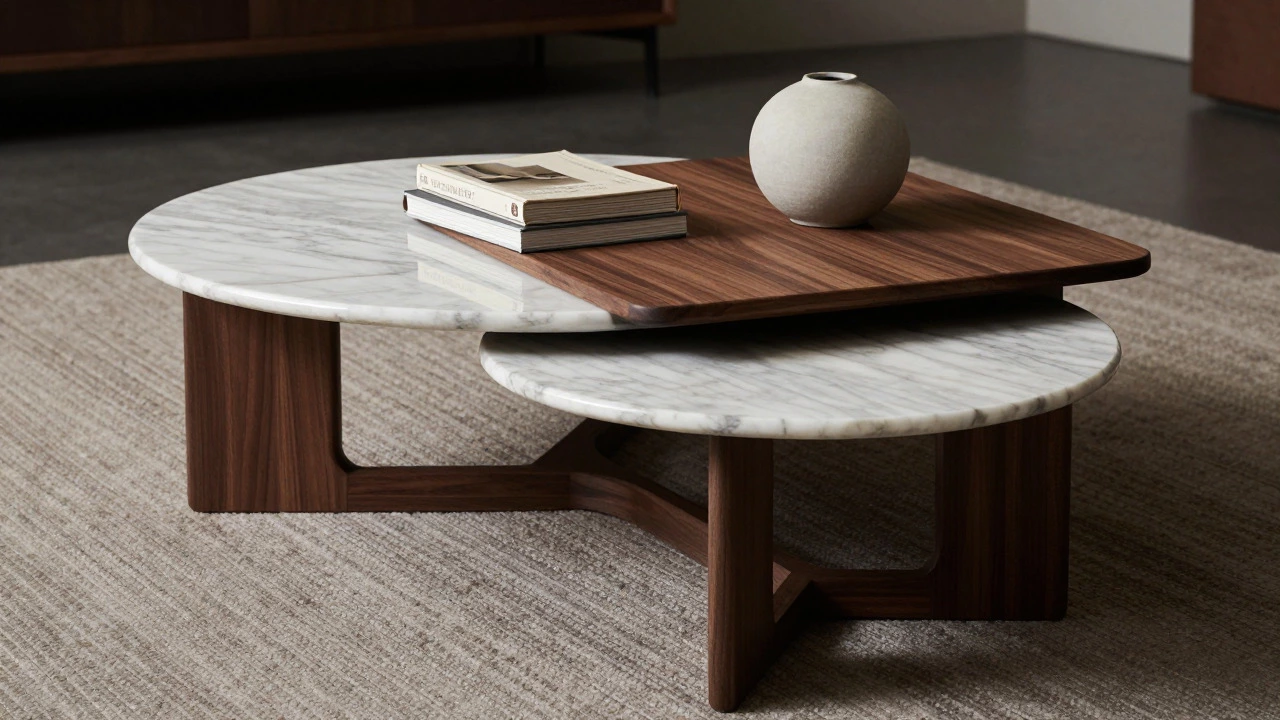
What if you want the surface area of a square but the flow of a round? Consider nesting tables. This setup involves two smaller tables, one slightly smaller than the other, that can be stacked or separated. When you need more space, pull them apart to create a larger, irregular surface. When you need to clear the floor for yoga or dancing, stack them together. This hybrid approach solves the dilemma entirely. It offers flexibility that a single fixed-shape table cannot match. Just ensure the materials and finishes match to keep the look cohesive.
Frequently Asked Questions
Which shape is better for small apartments?
Round tables are generally better for small apartments. Their lack of corners makes the space feel less cluttered and allows for easier movement. A compact round table (60-70cm diameter) can fit under a window or in a tight corner without blocking pathways.
Can I mix square and round elements in my living room?
Yes, mixing shapes adds visual interest. If you have a square coffee table, pair it with a round side table or a circular rug. Conversely, if you have a round coffee table, use square throw pillows or a rectangular artwork above the sofa. The contrast prevents the room from looking monotonous.
How far should the coffee table be from the sofa?
The ideal distance is between 35cm and 45cm (14 to 18 inches). This allows you to reach your drink without stretching awkwardly while still leaving enough room for your knees when seated. If the gap is too small, the room feels cramped; if it’s too large, the table becomes inaccessible.
Is a square table harder to decorate?
Not necessarily, but it requires more intentionality. Because the lines are strict, asymmetrical arrangements can look messy. Stick to centered, symmetrical layouts or use a large rectangular tray to define the zone. Round tables are more forgiving with casual, off-center styling.
What material pairs best with a round table?
Wood and stone work exceptionally well with round tables. The natural grain of wood or the texture of marble softens the geometric perfection of the circle. Glass can work, but it may make the table appear fragile in high-traffic areas. Metal bases provide a modern contrast to the organic shape.
Write a comment