
Coffee Table Placement Calculator
Your Measurements
Analysis
OptimalThis is the industry standard sweet spot. It allows for easy reach without compromising legroom.
Picture this: you’re sinking into your sofa after a long day, ready to relax. You reach for your drink on the coffee table, but it’s just out of arm’s length. Or worse, you have to lean forward awkwardly, spilling half your tea. On the flip side, maybe the table is so close that every time you shift, your knee hits the edge with a painful thud. It’s a common living room dilemma. Getting the distance between your couch and coffee table is a critical spatial relationship in interior design that affects comfort, accessibility, and visual balance. right isn’t just about aesthetics; it’s about making your space actually usable.
We’ve all been there. The internet is full of perfect living rooms, but they often ignore the reality of human bodies moving around. So, what is the magic number? How do you measure it without turning your lounge into an obstacle course or a barren wasteland? Let’s break down the practical rules, the exceptions, and how to tailor this spacing to your specific lifestyle.
The Golden Rule: 14 to 18 Inches
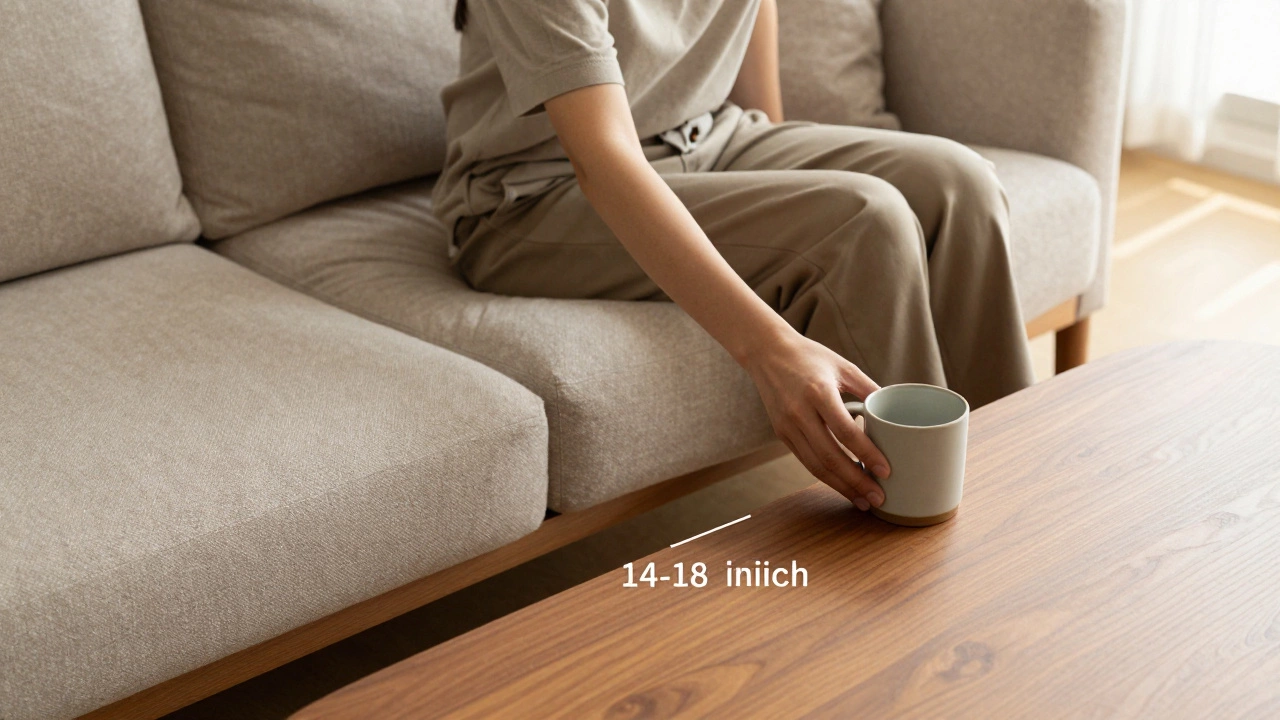
If you want a quick answer, stick to the industry standard: 14 to 18 inches. This range is widely recommended by interior designers and ergonomics experts because it strikes a balance between reachability and legroom. At 14 inches, you can easily grab a remote or a snack without stretching. At 18 inches, you still have enough room to cross your legs comfortably without feeling cramped.
Why this specific range? Think about the average human stride and sitting posture. When seated, your knees naturally bend at roughly a 90-degree angle. If the gap is too narrow, your shins collide with the table base. If it’s too wide, your arms have to extend fully, which strains your shoulders over time. The 14-18 inch sweet spot allows for natural movement. It accommodates most body types and ensures that the table feels like an extension of the seating area rather than a separate island.
To measure this accurately, don’t guess. Use a tape measure from the front edge of the sofa cushion (not the frame) to the nearest edge of the coffee table. Do this while someone is sitting on the couch in their normal relaxed position. If they can place a foot flat on the floor and rest their hands on the table without leaning, you’re in the zone.
Height Matters Just as Much as Distance
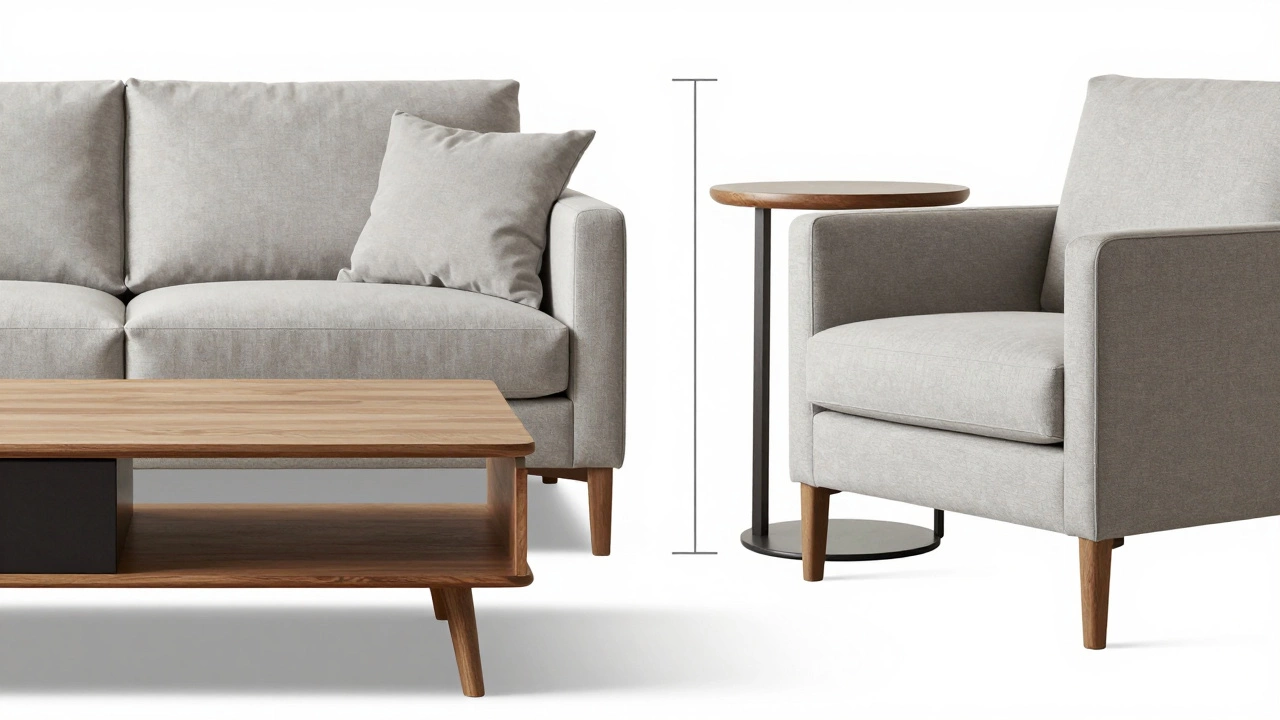
Distance doesn’t exist in a vacuum. The height of your coffee table relative to your sofa seat height plays a huge role in perceived comfort. A common mistake is prioritizing the gap while ignoring vertical alignment. Ideally, the top of the coffee table should be level with the sofa cushions, or within 1 to 2 inches above or below them.
Here’s why: if the table is significantly higher than the seat, you’ll feel like you’re reaching up to a counter, which forces you to hunch your shoulders. If it’s much lower, you’ll constantly look down, straining your neck. When the heights align, your eyes stay level, and your arms rest naturally. This creates a cohesive visual line and improves physical comfort during long movie nights or game sessions.
Consider the type of sofa you have. Low-profile modern sofas often sit closer to the ground, sometimes only 15 inches high. In these cases, a low-slung coffee table (around 12-16 inches high) works best. Traditional Chesterfield sofas or deep-seated recliners might have seats at 18-20 inches. Pairing these with a taller table (18-22 inches) maintains that ergonomic harmony. Always check the seat height before buying or rearranging.
| Sofa Seat Height | Ideal Coffee Table Height | Best For |
|---|---|---|
| 12-15 inches (Low Profile) | 12-16 inches | Modern minimalist spaces, floor seating |
| 16-18 inches (Standard) | 16-18 inches | Most traditional and contemporary sofas |
| 19-22 inches (High Back/Recliner) | 18-22 inches | Loungers, deep-seated family sofas |
Adjusting for Room Size and Traffic Flow
The 14-18 inch rule is a starting point, not a law. Your room’s dimensions and how people move through it should dictate adjustments. In a small apartment, every inch counts. You might squeeze the gap down to 12 inches to save floor space, but only if the coffee table has rounded edges to prevent shin-bashing. Sharp corners in tight spaces are hazards waiting to happen.
In larger open-plan living areas, you can afford to widen the gap to 20-24 inches. This creates a more airy, spacious feel and allows for easier walking paths behind the sofa. However, be careful not to go beyond 24 inches unless you have a very large sectional. Beyond that, the table starts to feel disconnected from the seating group. It becomes an isolated piece of furniture rather than part of the conversation area.
Traffic flow is another critical factor. Ensure there’s at least 30-36 inches of clear walking space behind the sofa and on the sides of the coffee table. If your living room doubles as a hallway to other rooms, you need wider aisles. A cramped path leads to constant bumping and frustration. Measure the entire perimeter of the seating arrangement, not just the front gap.
Shape and Style Influence Spacing
Not all coffee tables are created equal. The shape and style of your table can affect how much space you need. Rectangular tables are the most common and fit neatly under the center of a sofa. They work well with the standard 14-18 inch gap. Round or oval tables, however, offer a softer silhouette. Because they lack sharp corners, you can often place them slightly closer (around 12-14 inches) without the risk of injury. This makes them ideal for homes with young children or pets who run around frequently.
Nesting tables are another option. These smaller tables tuck under each other or against the sofa when not in use. They provide flexibility. You can pull one out for extra surface area when guests arrive, then push it back to maintain a wider walking path. This dynamic approach is great for multi-functional spaces where the living room also serves as a home office or play area.
Consider the leg structure too. Tables with thick, solid bases require more clearance because they occupy more visual and physical volume. Tables with slender legs or open frames create a sense of lightness, allowing you to get away with a slightly tighter gap without the room feeling cluttered. Visual weight matters almost as much as physical measurement.
Special Considerations: Kids, Pets, and Accessibility
If you have toddlers, safety trumps design trends. A wider gap of 18-24 inches gives little ones room to crawl or walk between the sofa and table without getting trapped. Choose tables with soft, rounded edges or add corner guards. Avoid glass tops if kids are climbing on furniture nearby. Stability is key; ensure the table won’t tip if a child pulls on it.
Pets also change the equation. Dogs love to stretch out in front of the TV, often right between the sofa and table. If your dog is large, you might need a wider gap to accommodate their sleeping space. Alternatively, choose a raised coffee table with plenty of legroom underneath, giving your pet a cozy den-like spot to curl up. Just make sure the table is sturdy enough to withstand occasional nudges.
For accessibility, especially for elderly users or those with mobility issues, the gap needs to be wider. Aim for 20-24 inches to allow easy transfer from the sofa to the floor or a wheelchair. The table height should also be considered carefully; it shouldn’t obstruct leg braces or walkers. Universal design principles suggest creating clear, unobstructed pathways that accommodate diverse needs.
Visual Balance and Proportion
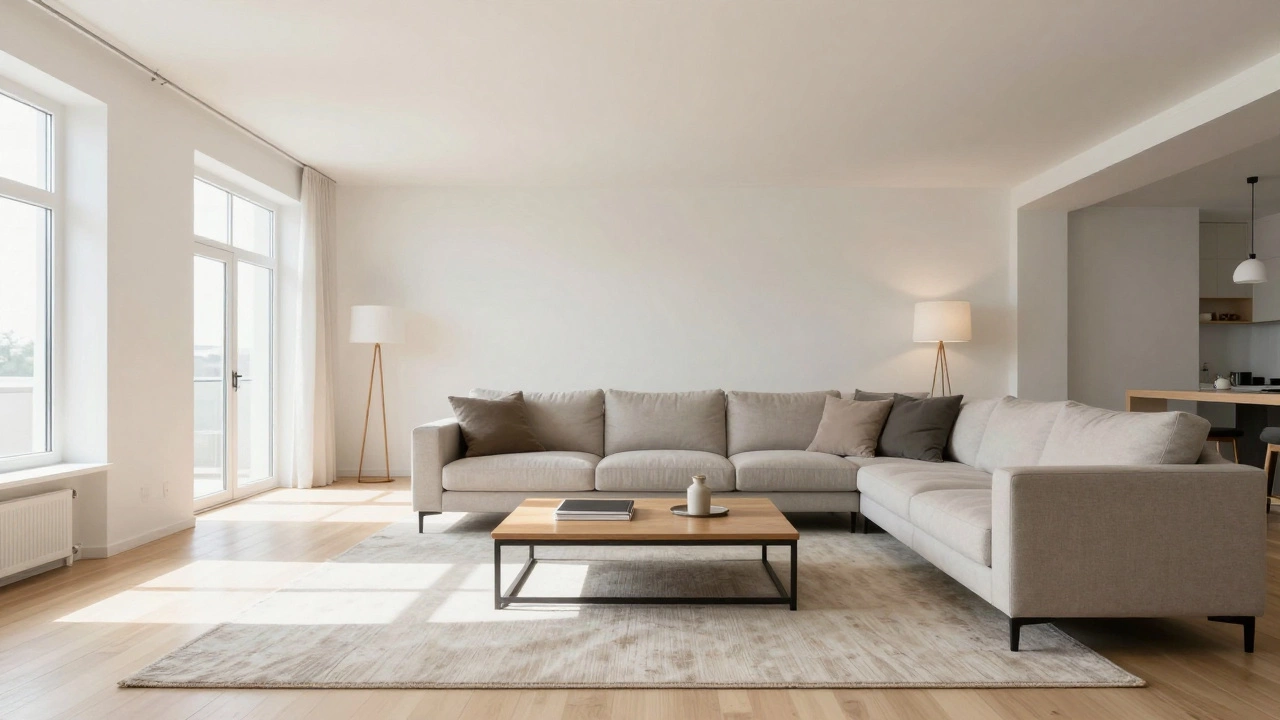
Beyond function, consider how the spacing affects the look of your room. The coffee table should generally be about two-thirds the length of your sofa. If it’s too small, it looks lost. If it’s too big, it overwhelms the space. The gap between them contributes to this proportion. A consistent gap along the entire length of the sofa creates symmetry and order.
Use rugs to anchor the arrangement. All four legs of the sofa and the coffee table should ideally rest on the same rug. This defines the conversation area and helps unify the pieces. If the rug is too small, the table might hang off the edge, disrupting the visual flow. Ensure the rug is large enough to accommodate the furniture plus the necessary gaps.
Lighting also plays a role. Floor lamps placed near the outer edges of the sofa help define the boundary of the seating area. They draw the eye outward, making the central gap feel intentional rather than empty. Avoid placing heavy decor items directly in the middle of the gap, as this breaks the visual connection between the sofa and table.
Common Mistakes to Avoid
One frequent error is measuring from the back of the sofa instead of the front edge of the cushion. The cushion compresses when you sit, changing the effective depth. Always measure from where your body actually rests. Another mistake is ignoring the table’s overhang. Some tables have shelves or extended surfaces that protrude further than the main top. Include these in your measurements.
Don’t forget about accessories. Books, trays, and vases take up surface space. If your table is already cluttered, you might need a bit more gap to maneuver around items. Keep the tabletop relatively clear to maintain ease of access. Finally, resist the urge to match everything perfectly. Mixing materials and styles can add interest, but ensure the proportions remain harmonious. A bulky wooden table paired with a delicate sofa might require more space to avoid looking top-heavy.
Final Tips for Perfect Placement
Before committing to a permanent layout, use painter’s tape to mark the positions on the floor. Walk around, sit down, and test the feel. Adjust the lines until it feels right. This low-cost method prevents costly mistakes. Involve everyone who uses the space in the testing process. What feels comfortable to one person might be awkward for another.
Remember, design is personal. The guidelines here are tools, not rules. If you prefer a wider gap for a more formal look, go for it. If you like a cozy, snug arrangement, tighten the space. The goal is to create a living room that reflects your lifestyle and brings you joy every time you sit down. Comfort is subjective, but ergonomics provides a solid foundation to build upon.
What is the standard distance between a couch and coffee table?
The standard distance is 14 to 18 inches. This range allows for easy reach of items on the table while providing sufficient legroom to sit comfortably without hitting your knees.
How far should the coffee table be from the couch in a small apartment?
In small apartments, you can reduce the gap to 12 inches to save space. Ensure the coffee table has rounded edges to prevent injury, and keep the tabletop clear to maintain a sense of openness.
Does the height of the coffee table matter?
Yes, height is crucial. The coffee table should be level with the sofa cushions or within 1-2 inches above or below. This alignment ensures ergonomic comfort and visual harmony.
How do I measure the correct distance?
Measure from the front edge of the sofa cushion (where you sit) to the nearest edge of the coffee table. Have someone sit on the couch in a relaxed position to ensure accurate measurement.
Is it better to have a round or rectangular coffee table for tight spaces?
Round or oval tables are better for tight spaces because they lack sharp corners, reducing the risk of injury. They also create a softer visual flow, allowing for slightly closer placement (12-14 inches).
Write a comment