
US vs UK Furniture Term Translator
-
-
Type a term above to see how it translates across the Atlantic.
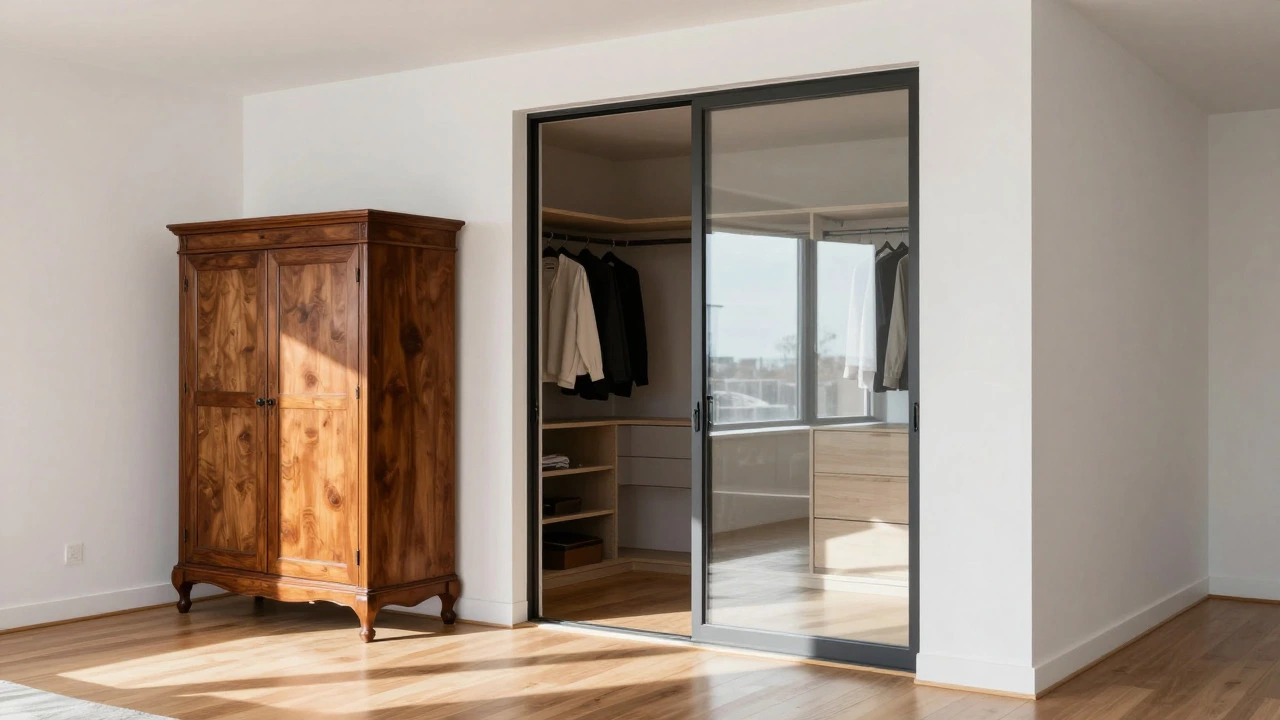
You’re scrolling through an American home decor site, or maybe you’re watching a US-based renovation show. The host walks into a bedroom and says, “Let’s check out the closet.” You pause. In your head, you picture a standalone piece of furniture with doors-what you call a wardrobe. But on screen, they open a door in the wall and pull clothes from shelves built directly into the house. It’s confusing, right?
If you’ve ever wondered why Americans seem to have less furniture for storing clothes, or if you’re trying to buy storage online and keep getting lost in translation, you’re not alone. Language differences between the UK and the US can make simple shopping trips feel like decoding a foreign language. So, what is a wardrobe called in the USA? The short answer is: it depends on whether the storage is built-in or freestanding.
The Big Difference: Built-In vs. Freestanding
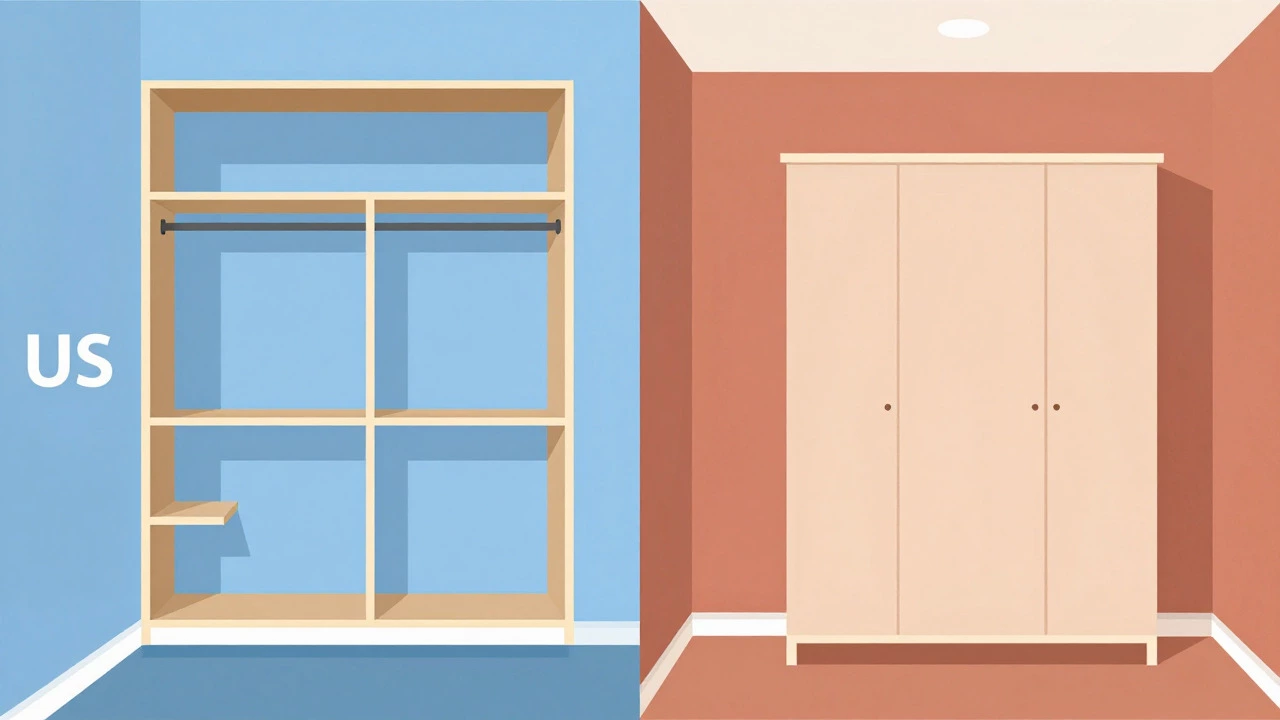
To understand the terminology, you first need to understand the construction. In the United Kingdom, Australia, and many other parts of the world, bedrooms often don’t have built-in storage. Instead, people buy large, standalone cabinets to hang and fold their clothes. This piece of furniture is universally known as a wardrobe is a tall, freestanding cabinet used for storing clothes, typically featuring hanging rails, shelves, and sometimes drawers.
In the US, however, most homes are built with built-in closets are storage spaces constructed directly into the walls of a room, usually consisting of a framed opening with shelves, rods, and doors that are part of the house structure. Because this storage is permanent and attached to the building, Americans rarely use the word "wardrobe" to describe where they keep their shirts and pants. They simply say "closet."
This structural difference drives the vocabulary. If you ask an American where their wardrobe is, they might look at you strangely. They’d likely point to the corner of their bedroom and say, “My closet is over there.” They aren’t referring to a piece of furniture; they’re referring to a room feature.
So, What Do Americans Call a Freestanding Wardrobe?
But wait-do Americans own freestanding storage units? Yes, absolutely. People live in apartments without closets, they need extra storage, or they just prefer the aesthetic of a standalone unit. So, what do they call these items?
Here is where it gets tricky. There isn’t one single word that perfectly replaces "wardrobe" in all contexts. Instead, Americans use several terms depending on the style, size, and material of the unit.
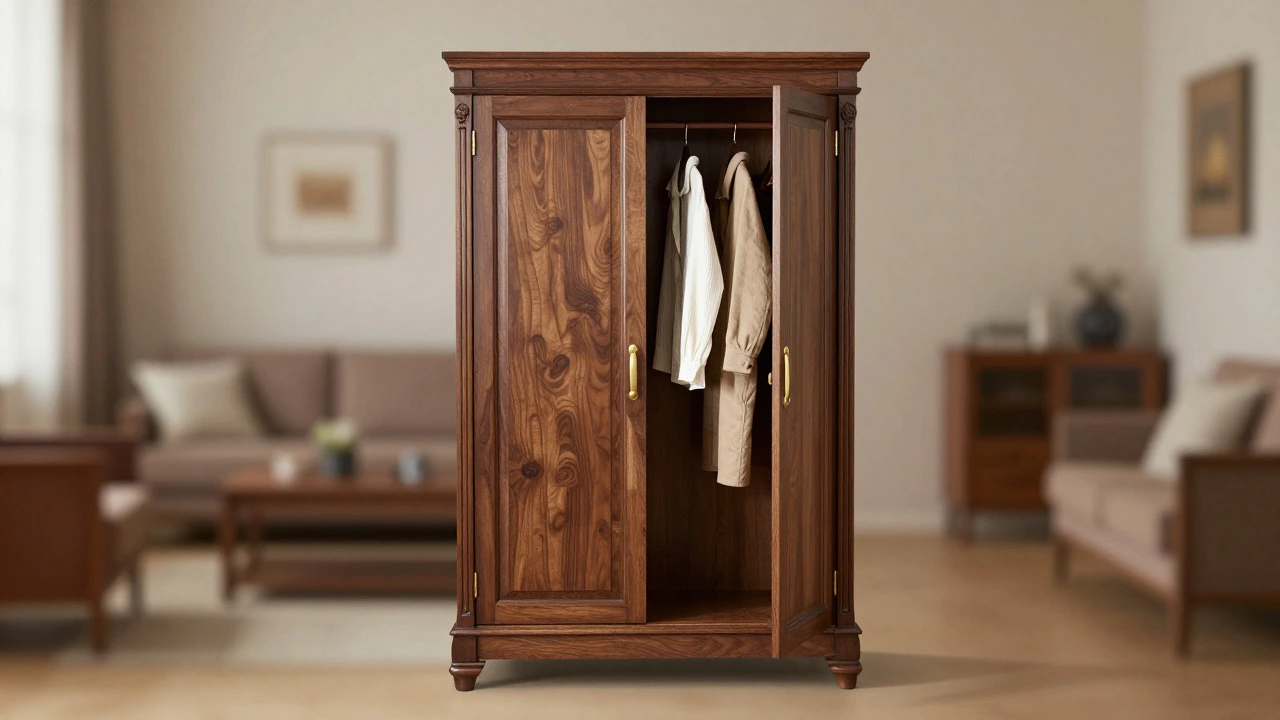
- Armoire: This is the closest direct equivalent to the British "wardrobe." An armoire is a large, freestanding wooden cabinet with double doors, originally designed for storing clothing, often featuring ornate details or a vintage style. If you see a heavy, wooden, floor-to-ceiling unit with two swinging doors, an American will almost certainly call it an armoire. The term comes from French, but it has been fully adopted into American English to describe this specific type of furniture.
- Closet Organizer / Portable Closet: For simpler, cheaper options-like wire racks or fabric cubes-Americans often use descriptive terms. You’ll see products listed as "portable closets" or "closet organizers" even though they sit in the middle of the room.
- Dresser: Be careful here. A dresser is different. It’s lower, wider, and primarily made of drawers. While you might store some folded clothes in a dresser, it doesn’t have a hanging rail. In the UK, you might mix up "chest of drawers" and "wardrobe," but in the US, the distinction is strict: dressers hold folded items; wardrobes/armoires hold hanging items.
Why Does This Confusion Happen?
It boils down to housing history and real estate standards. In the early 20th century, American residential architecture began standardizing around the idea of the "master suite" with en-suite bathrooms and walk-in closets. As housing became more affordable and standardized, builders included closets as a selling point. Why would a buyer pay extra for a standalone cabinet when the house already has storage?
In contrast, many older European and Commonwealth homes were retrofitted with storage solutions over time. Adding a built-in closet requires knocking down walls and rebuilding frames, which is expensive and disruptive. Buying a wardrobe is easy-you just roll it in. Consequently, the culture of buying standalone storage remained strong outside the US.
This also affects rental markets. In the US, if an apartment doesn’t have a closet, it’s considered a significant flaw. Tenants expect closets. In the UK, it’s common to rent a studio or small flat with no built-in storage at all, making the purchase of a wardrobe a necessity rather than a choice.
Shopping Online: How to Find What You Need
If you’re living in the US and you’re used to calling it a wardrobe, searching for "wardrobe" on Amazon or Wayfair might still yield results, but you’ll get mixed bag of items. You’ll see traditional armoires, yes, but you’ll also see a lot of marketing fluff. Sellers know the term is international, so they use it to catch search traffic.
To get the best results, adjust your search terms based on what you actually want:
| UK Term | US Equivalent / Search Term | Description |
|---|---|---|
| Wardrobe | Armoire, Clothing Armoire | Tall, wooden, double-door standing unit. |
| Chest of Drawers | Dresser, Chest | Low, wide unit with drawers only. |
| Built-in Cupboard | Closet, Walk-in Closet | Storage integrated into the wall. |
| Fabric Storage Unit | Portable Closet, Cube Organizer | Cheap, temporary, non-wood storage. |
If you’re looking for that classic, tall, elegant piece of furniture, type "armoire." If you’re looking for something modern and minimalist, try "freestanding closet organizer" or "modular wardrobe system." The latter term is gaining popularity as IKEA and similar brands introduce modular systems that mimic built-ins but remain movable.
Other Regional Variations to Watch Out For
While the US-UK divide is the most prominent, it’s not the only one. If you’re dealing with international suppliers or friends from other countries, keep these in mind:
- Australia & New Zealand: Like the UK, they use "wardrobe" for the furniture. However, newer Australian homes increasingly include "walk-in robes" (note the spelling: robe instead of closet). "Robe" is the local term for a bathroom or dressing area.
- Canada: Canada sits in the middle. They use "closet" for built-ins, just like the US. But because of proximity to both American and British influences, you’ll hear "wardrobe" used occasionally, especially among immigrants or in older homes.
- India: Post-colonial influence means "wardrobe" is widely understood. However, local languages have their own terms, such as "almari" in Hindi, which refers to any cupboard or storage unit, not just for clothes.
Does the Word "Wardrobe" Exist in the US at All?
Yes, but its meaning has shifted. In the US, "wardrobe" usually refers to the collection of clothes a person owns, not the furniture. For example, an actress might have a "costume wardrobe," or you might say, "I’m updating my winter wardrobe."
You might also hear the phrase "wardrobe malfunction," which refers to an accidental exposure of clothing during a public event. Again, it’s about the clothes, not the box they come in.
If you walk into an American furniture store and ask for a "wardrobe," the salesperson will probably understand you, especially if they work in a high-end department. They’ll likely guide you to the armoire section. But if you’re browsing online, sticking to "armoire" will save you from sifting through thousands of irrelevant results for closet liners and hangers.
Practical Tips for Choosing Storage in the US
If you’re moving to the US or buying furniture there, here are a few things to keep in mind:
- Measure Your Doorways: American homes, especially older ones, can have narrow doorways. Large armoires often come in sections that need assembly. Make sure your entry path can handle the largest piece.
- Check for Built-Ins First: Before buying a huge piece of furniture, verify if the room has a closet. Many US apartments have surprisingly small closets, or none at all in secondary bedrooms. Don’t assume.
- Consider Modular Systems: Brands like IKEA offer PAX or KLEPPSTA systems. These are marketed as "wardrobes" but are essentially customizable frames. They’re popular in the US because they allow renters to create custom storage without drilling into walls.
- Beware of "Closet" Kits: If you have a bare closet space (no shelves), you can buy a "closet kit." These are wire or wood systems you install inside the existing closet frame. They are not freestanding.
Summary: The Quick Cheat Sheet
So, to wrap this up simply: If it’s built into the wall, it’s a closet. If it’s a big, wooden, standalone box with doors, it’s an armoire. If you’re talking about your collection of jeans and jackets, it’s your wardrobe.
Understanding these distinctions won’t just help you shop smarter; it’ll help you communicate better with landlords, movers, and interior designers. No more pointing at a wall and saying "wardrobe" while everyone else looks confused. Now you know exactly what to say.
Do Americans use the word wardrobe?
Yes, but rarely to refer to furniture. In the US, "wardrobe" usually refers to a person's collection of clothing. When referring to the furniture itself, Americans typically use the word "armoire" for large, standalone wooden cabinets.
What is the difference between a closet and an armoire?
A closet is a built-in storage space that is part of the house's structure, usually found within a wall. An armoire is a freestanding piece of furniture that you can move around the room. Closets are fixed; armoires are portable.
Can I buy a wardrobe in the US?
You can, but you should search for "armoire" or "freestanding closet" to find the best results. Searching for "wardrobe" may return mixed results including closet organizers and accessories rather than full-sized furniture.
Is a dresser the same as a wardrobe?
No. A dresser is a low, wide piece of furniture with drawers for folded clothes. A wardrobe (or armoire) is tall and includes a hanging rail for garments like suits and dresses. They serve different storage needs.
Why don't most US homes have wardrobes?
Most US homes are built with built-in closets as a standard feature of the architecture. Because storage is integrated into the walls, there is less demand for large, standalone furniture pieces like wardrobes compared to countries where built-ins are less common.
Write a comment