
Coffee Table Placement & Clearance Checker
Placement Analysis
Enter your measurements to get a professional recommendation...
Quick Guide to Drawer Orientation
- The Golden Rule: Drawers should face the primary seating area for easy access.
- The Reach Test: If you have to stand up or lean awkwardly to open a drawer, it's in the wrong spot.
- The Clearance Check: Ensure there is at least 14 to 18 inches between the table and the sofa so drawers can glide open fully.
- The Visual Flow: Handles and pulls usually look better facing the room's center than the wall.
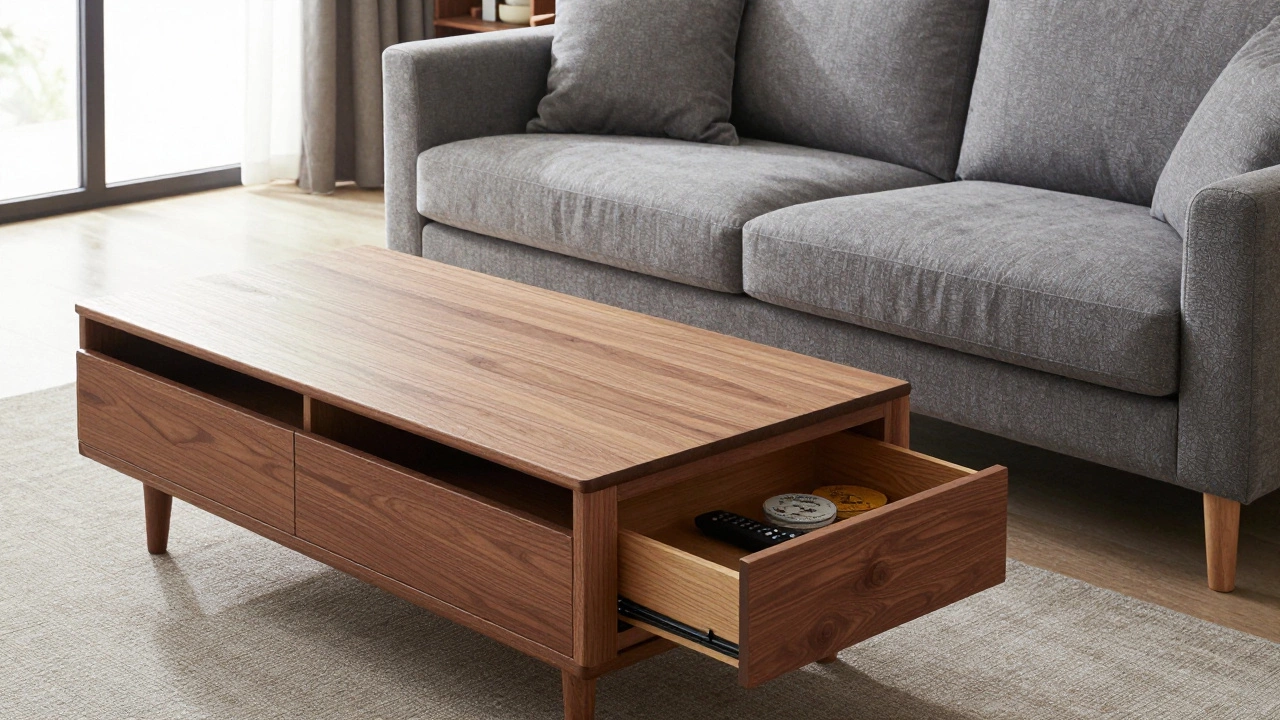
When we talk about Coffee Tables is a low table typically placed in front of a sofa for holding drinks, remotes, and decor. Also known as Cocktail Tables, these pieces act as the anchor for the living room. If your table has built-in storage, the utility of that storage depends entirely on where the handles are located.
Why Accessibility is Your Top Priority
Think about what you actually keep in those drawers. Usually, it's the stuff you need while you're lounging: Remote Controls, coasters, tablets, or maybe a few notebooks. If the drawers face the sofa, you can reach over and grab your remote without ever leaving your seat. If they face away, you're forced to get up, walk around the table, and then walk back. Over a year, that's a lot of unnecessary walking just to change the channel.
From a functional standpoint, a coffee table drawers setup that faces the seating allows for a "reach-and-grab" workflow. This is especially important in smaller apartments where the Living Room serves as a multi-purpose space for dining, working, and relaxing. When the storage is accessible, the table becomes a tool rather than just a decorative slab of wood.
The Clearance Conflict: Space vs. Convenience
One of the biggest mistakes people make is pushing the coffee table too close to the couch. If the table is practically touching the sofa, you won't have enough room to actually pull the drawer open. Most standard drawers require about 12 to 20 inches of clear space to open fully. If you only have 8 inches of gap, you'll find yourself hitting the sofa frame every time you try to reach your coasters.
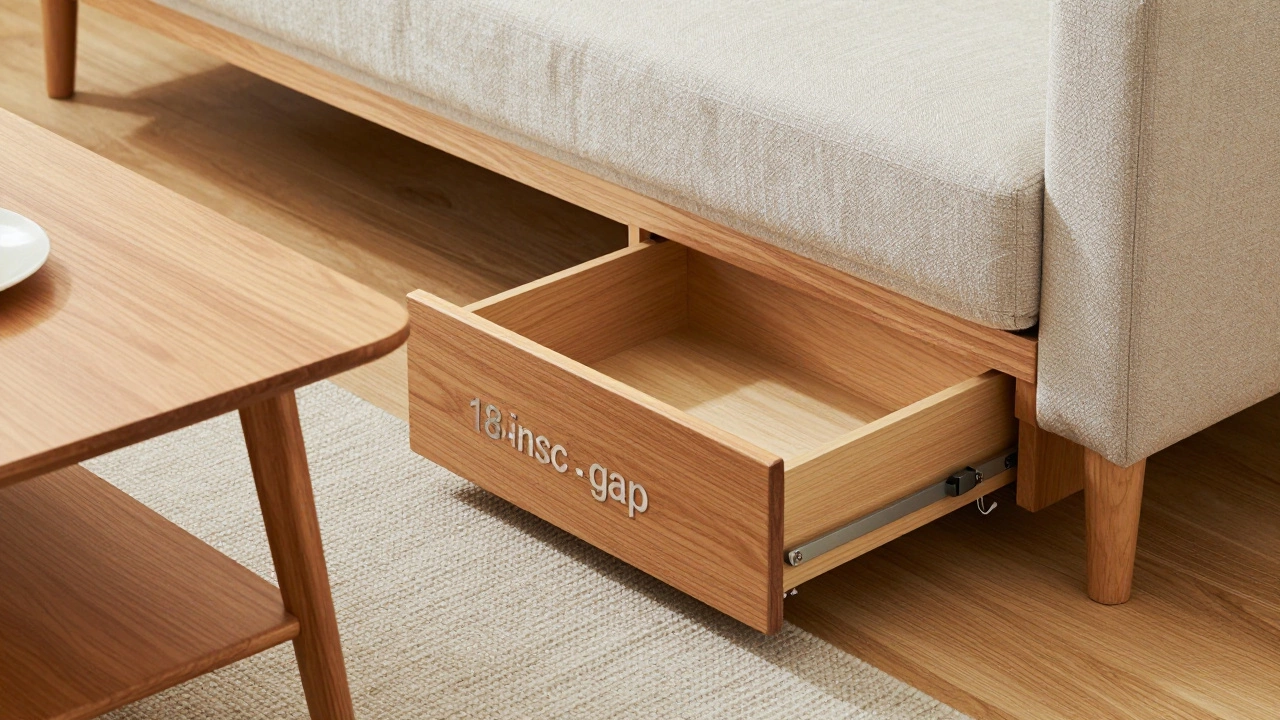
A good rule of thumb is the "18-inch gap." This gives you enough legroom to walk between the table and the sofa while still keeping the table within arm's reach. If you are dealing with a very narrow room, you might be tempted to flip the table so the drawers face the open area of the room. While this solves the clearance issue, it kills the convenience. Instead, consider a table with "drop-down" drawers or open shelving if your space is that tight.
| Orientation | Pros | Cons | Best For |
|---|---|---|---|
| Facing Sofa | Maximum convenience, easy access to remotes | Requires more clearance space in front of sofa | Standard living rooms, lounging hubs |
| Facing Away | Saves legroom, hides clutter from guests | Inconvenient, requires standing up | Very narrow walkways, formal sitting areas |
| Side-Facing | Clean front profile, easy access from armchairs | Cramps the side flow of the room | L-shaped sectionals |
Dealing with Sectionals and L-Shaped Layouts
Not every room has a single, straight sofa. If you have a Sectional Sofa, the "correct" direction becomes a bit more complicated. In an L-shaped setup, you have two primary seating directions. If your coffee table only has drawers on one side, place them facing the longest section of the sofa. This is where most people spend their time and where the most "reach-in" activity happens.
If the table is positioned in the "crook" of the L, you might find that facing the drawers toward the main seating area blocks the path for someone walking into the room. In this specific case, look for a table with drawers on multiple sides. Some modern designs feature Dual-Sided Storage, meaning you can access a drawer regardless of whether you're sitting on the long end or the short end of the sectional.
The Visual Aspect: Aesthetics and "The View"
Beyond just utility, there's the visual weight of the furniture. Drawers usually have hardware-knobs, pulls, or finger-slots. These elements create a visual pattern. In interior design, you generally want the "active" side of the furniture to be visible. A flat, back panel of a table facing the sofa can look unfinished or like a mistake, even if the wood is painted to match.
However, if your coffee table has very chunky, industrial handles that clash with your Home Decor, you might be tempted to hide them. Don't sacrifice your back's comfort for a slightly cleaner look. If the handles are the problem, it's much easier to swap the hardware for something sleeker than it is to live with a table that you can't actually use while sitting down.
Alternative Storage Options If Your Layout is Tight
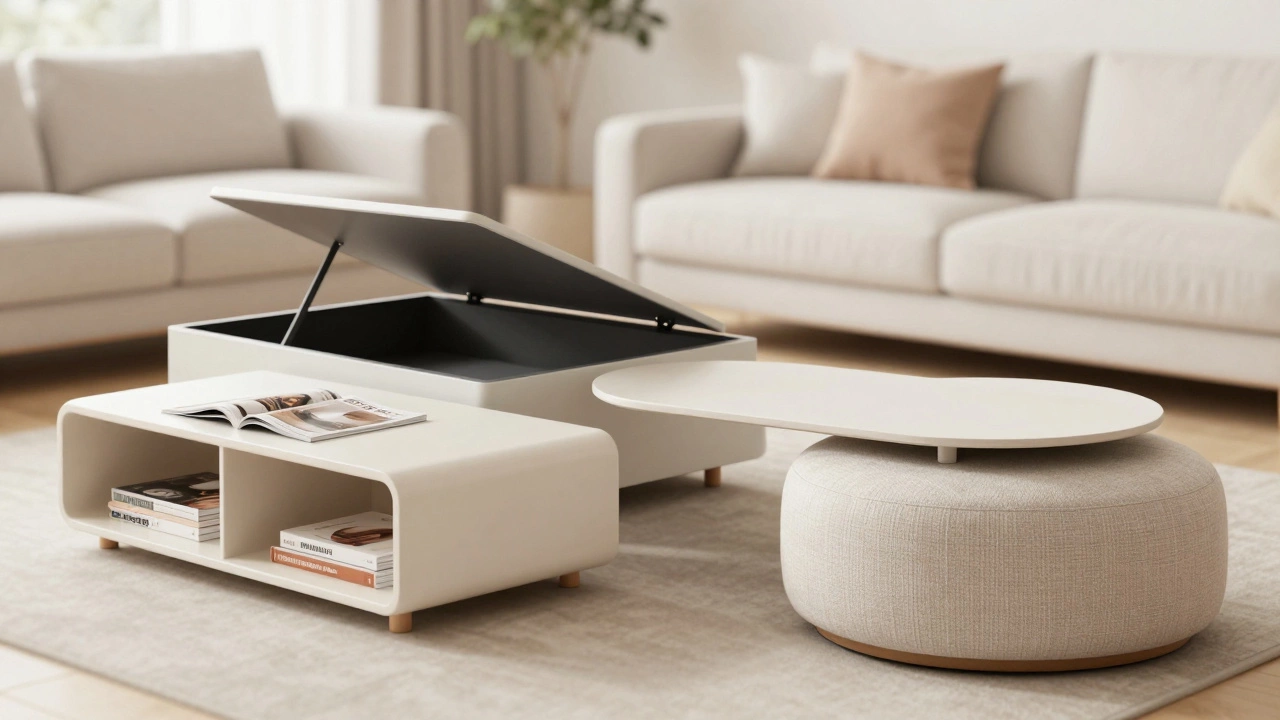
If you've realized that facing your drawers toward the sofa makes the room feel like an obstacle course, you might need a different type of storage. Not all coffee tables need drawers to be useful. Consider these alternatives:
- Lift-Top Tables: These allow the entire surface to rise and slide forward, giving you a desk-like experience and a massive hidden compartment.
- Open Cubbies: These provide a place to toss remotes and magazines without needing any clearance space for a sliding drawer.
- Nesting Tables: These offer flexibility; you can move the smaller tables closer to the sofa when you need a surface, and tuck them away to clear the path.
- Ottoman Coffee Tables: These often have a removable lid, providing deep storage that doesn't require a "front" or "back" orientation.
What if my coffee table has drawers on both sides?
If you have dual-sided drawers, you're in luck. Place the table centered to your seating. This allows people sitting on opposite ends of the room or on different chairs to access storage without crossing the entire living area. Just make sure you have enough clearance on both sides so that two people can't accidentally open drawers into each other's legs.
Can I put the drawers facing the TV to keep things tidy?
You can, but it's generally not recommended. The primary purpose of a coffee table is to serve the people sitting on the sofa. Putting drawers toward the TV means every time you need a coaster or a remote, you have to stand up. It treats the table more like a console or a side table rather than a central hub.
How much space do I really need to open a drawer?
While it depends on the depth of the drawer, 14 to 18 inches is the standard for a comfortable experience. If you have less than 12 inches, you'll likely feel cramped, and you may find yourself unable to open the drawer fully, which makes it hard to find things at the back.
Does the orientation affect the stability of the table?
Usually, no. However, if you have very heavy items in the drawers and the table is lightweight, opening a drawer toward the sofa can shift the center of gravity. This is rare, but it's something to keep in mind if you're using a budget-friendly, lightweight piece of furniture.
Should I use a rug under a coffee table with drawers?
Yes, a rug helps define the zone. Just ensure the rug is low-pile. A thick, shaggy rug can actually interfere with the bottom of some low-profile drawers, making them harder to slide or causing them to snag.
Final Setup Tips
If you're still unsure, try the "Live-In Test." Move the table into the position you think is best and spend one full evening using it. Try to reach for your phone, your drink, and your remote. If you find yourself sighing or stretching awkwardly, move the table. Furniture is meant to serve you, not the other way around. A a few inches of movement can be the difference between a living room that feels intuitive and one that feels like a puzzle.
Write a comment